Read outdoor camera ratings in context
Keep the exact model’s environmental rating, power arrangement and installation requirements together.
Updated:
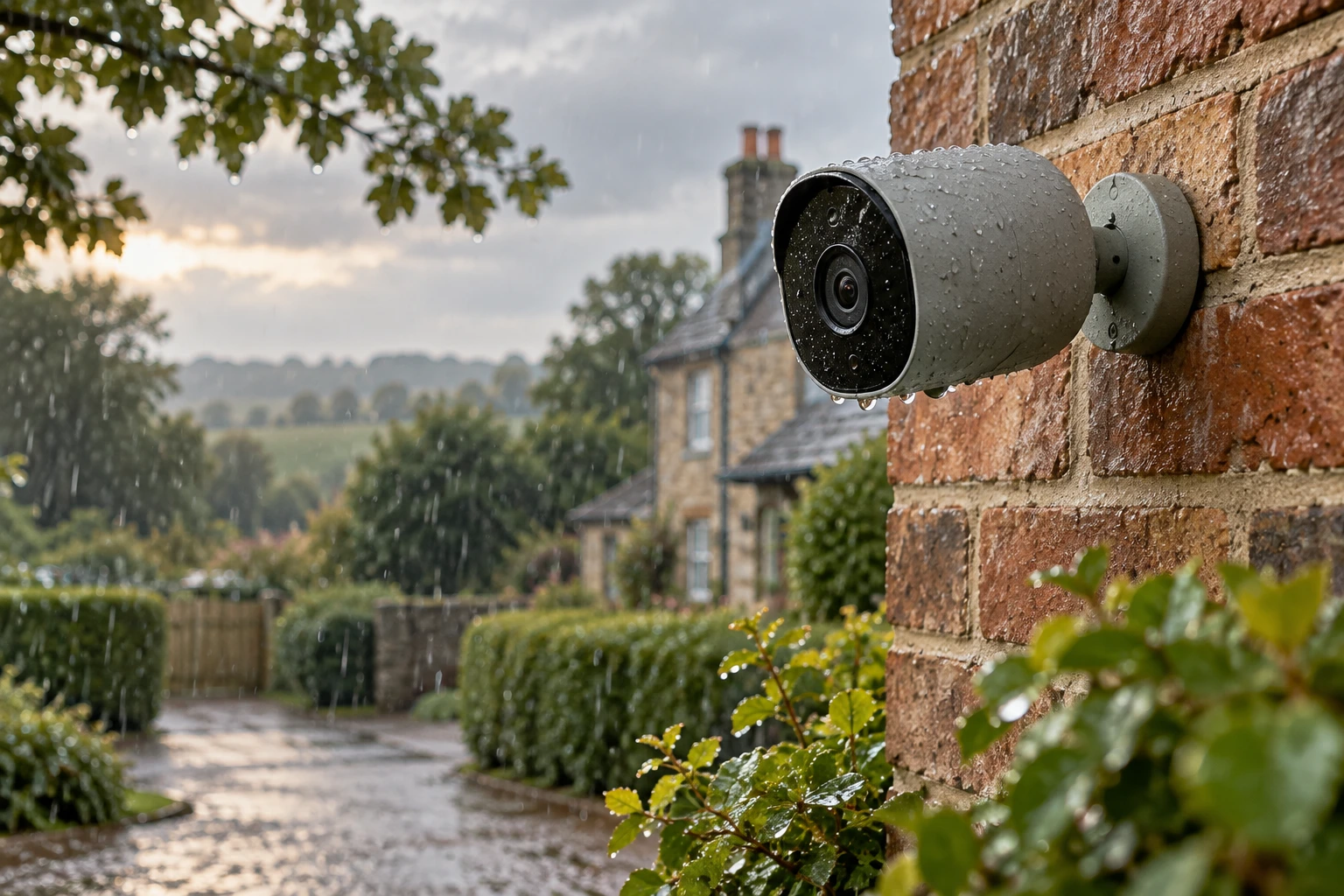
Keep the rating attached to the exact product
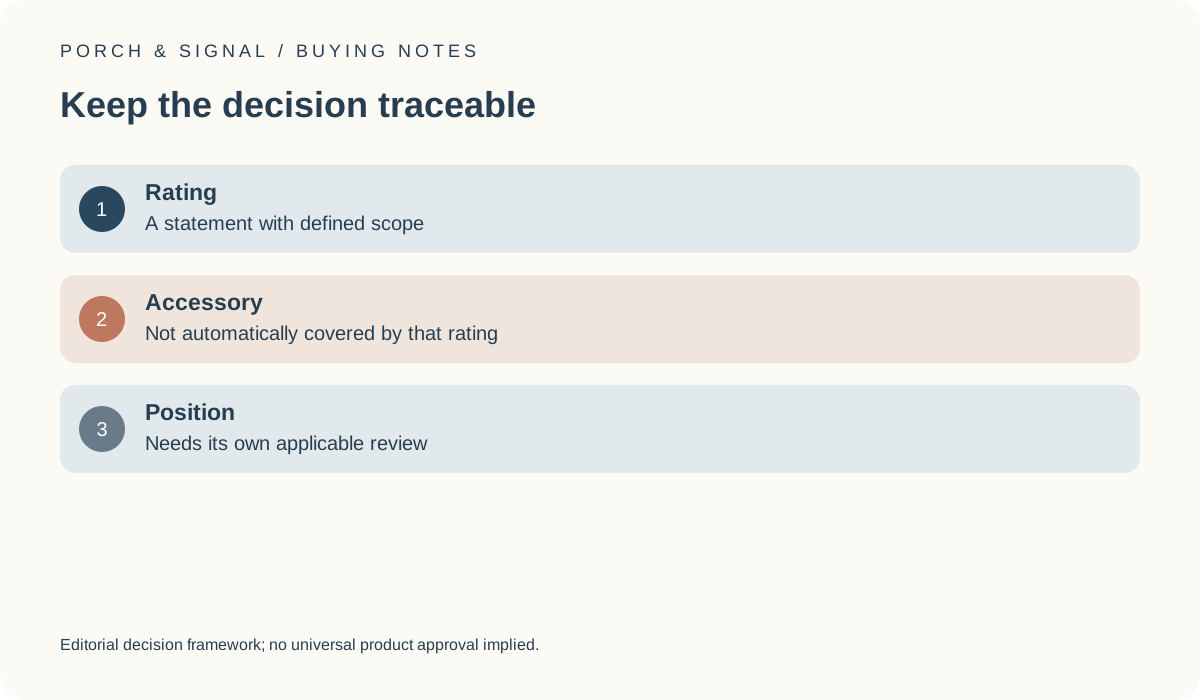
An outdoor label or environmental rating should remain with the precise model and document that states it. It is not a general approval for every location, accessory or way of supplying power. Record the hardware version where applicable and retain the manufacturer’s actual installation conditions. A camera that looks enclosed in a photograph cannot be assigned a rating from appearance.
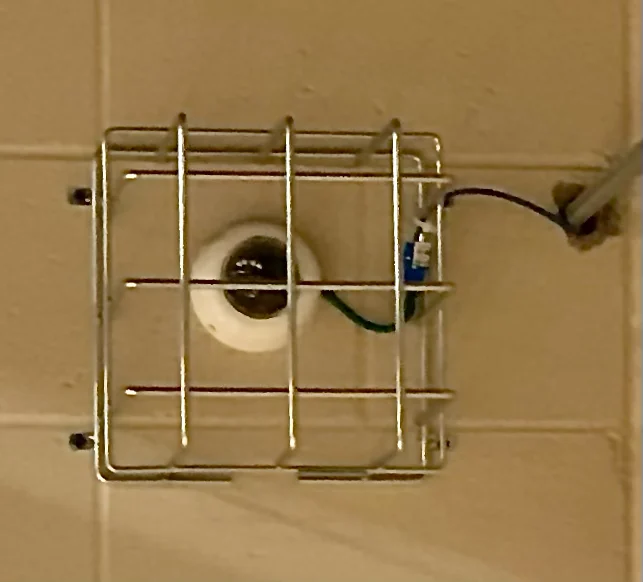
The guarded ceiling-camera photograph is archival physical context. It is not the Tapo model discussed as a source example and does not demonstrate rain, temperature or impact performance. A buying guide should distinguish the equipment that can be seen from the specifications that have actually been documented.
Budget only accessories that are documented to fit
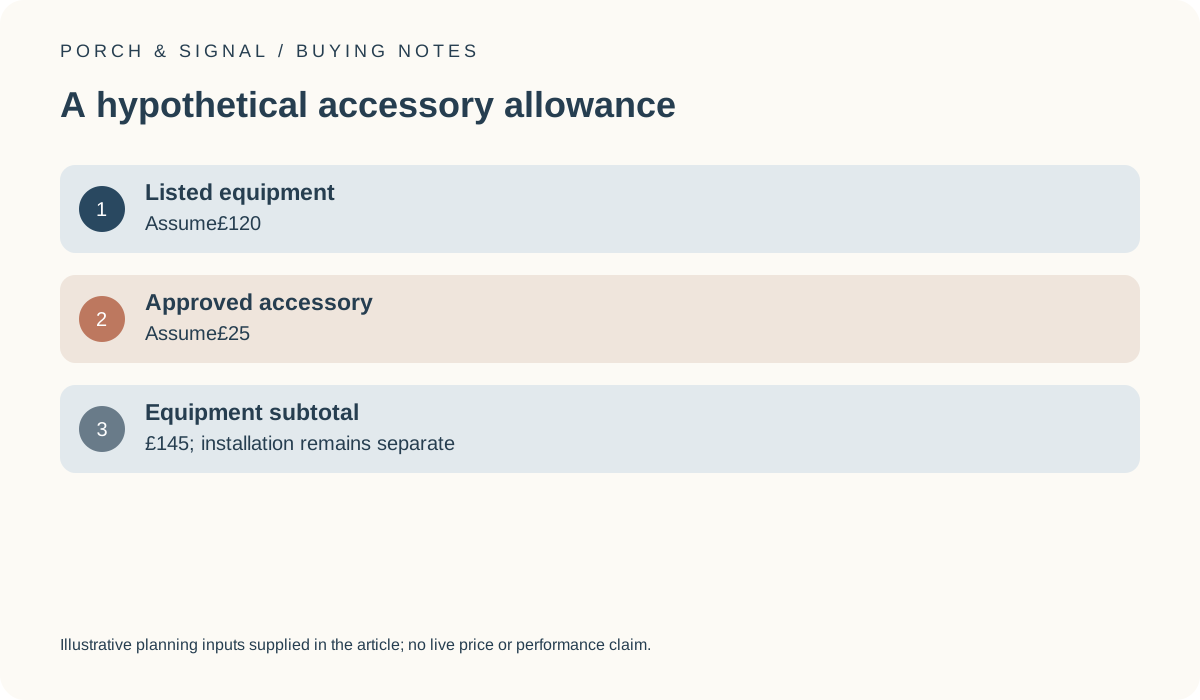
For a hypothetical equipment comparison, assume a camera costs £120 and a required approved accessory costs £25. The equipment subtotal is £145, with installation and other costs still separate. These are invented values, not current prices or a recommendation for a particular accessory. Compatibility must be established before the arithmetic is useful.
Keep the actual included-parts list and the accessory designation with the quote. A weather-related claim for the camera body should not silently be extended to an unrelated adapter or connection. If the product information does not explain the proposed arrangement, preserve the gap rather than assuming that a low-cost generic accessory solves the installation requirement.
Treat power as its own requirement
Identify whether the exact candidate uses a specified adapter, battery or another documented power arrangement. A wireless data connection is not the same as battery power, and a battery claim does not by itself establish a charging or replacement routine. This article provides no wiring or modification instructions. Use the actual product documentation and an appropriate installation assessment for the proposed location.
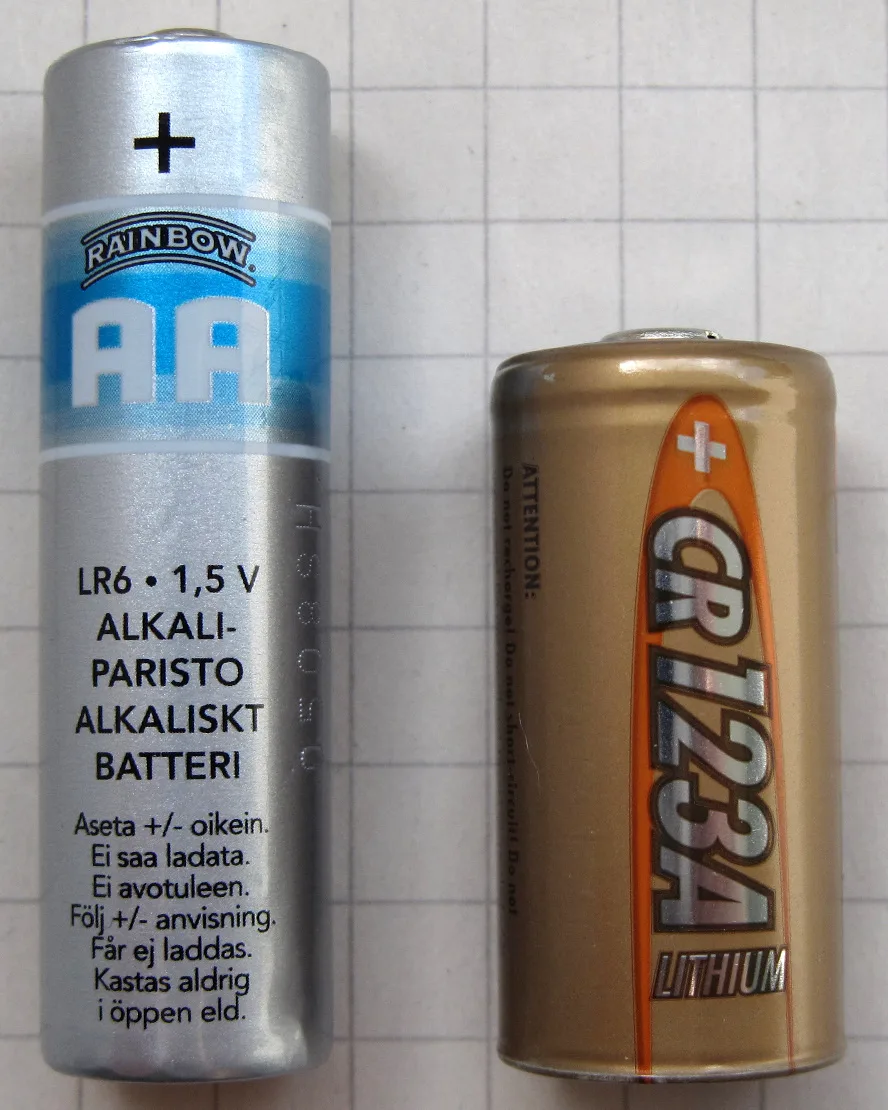
The battery photograph shows different physical forms, not interchangeable supplies. Its purpose is to prevent a visual match from becoming a compatibility conclusion. Keep the exact battery or supply identifier where relevant, along with any documented environmental and handling requirements. Do not improvise a substitution on the basis of the picture.
Read the manufacturer example with its limits
TP-Link’s UK C120 product page states IP66 for that named camera. Preserve the model and source date with that statement. The rating does not establish the complete suitability of an unidentified installation, nor does our reference reproduce a laboratory test or certify electrical safety. Review the product’s actual instructions and accessory scope before deciding that it fits a location.
Ongoing software support is another independent ownership question. The NCSC guidance is relevant to connected-device upkeep, but a software recommendation cannot answer an environmental suitability question. Keep physical conditions, connection requirements and software care in separate records so that satisfying one does not falsely imply the others are resolved.
TP-Link UK: Tapo C120 product information ? UK NCSC: Smart devices in the home ?
Leave unresolved location conditions visible
The final shortlist should state which environmental information is known and which location questions need a competent assessment. A sheltered-looking doorway in a photograph is not evidence that your proposed position has the same conditions. Likewise, a familiar product family may include different models or revisions. Retain the document for the actual item rather than copying a rating from a similar listing.
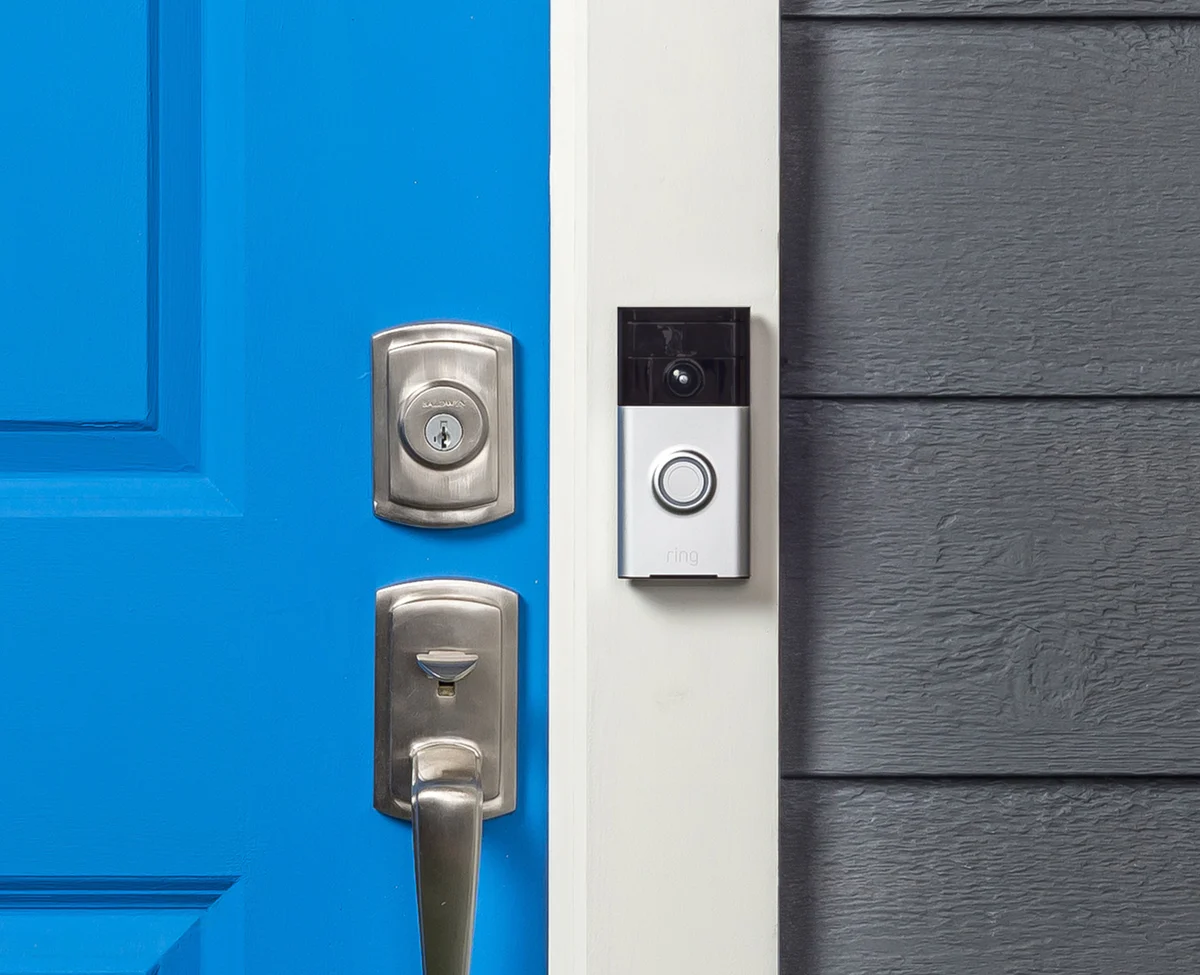
If the proposed arrangement cannot be established from the appropriate information, keep it unresolved before ordering. The doorbell image illustrates another entrance-facing product with its own requirements; it does not provide a template. A clear buying record is more useful than an unsupported statement that an outdoor rating makes the entire system weatherproof, safe or maintenance-free.