Choose camera quantity without promising coverage
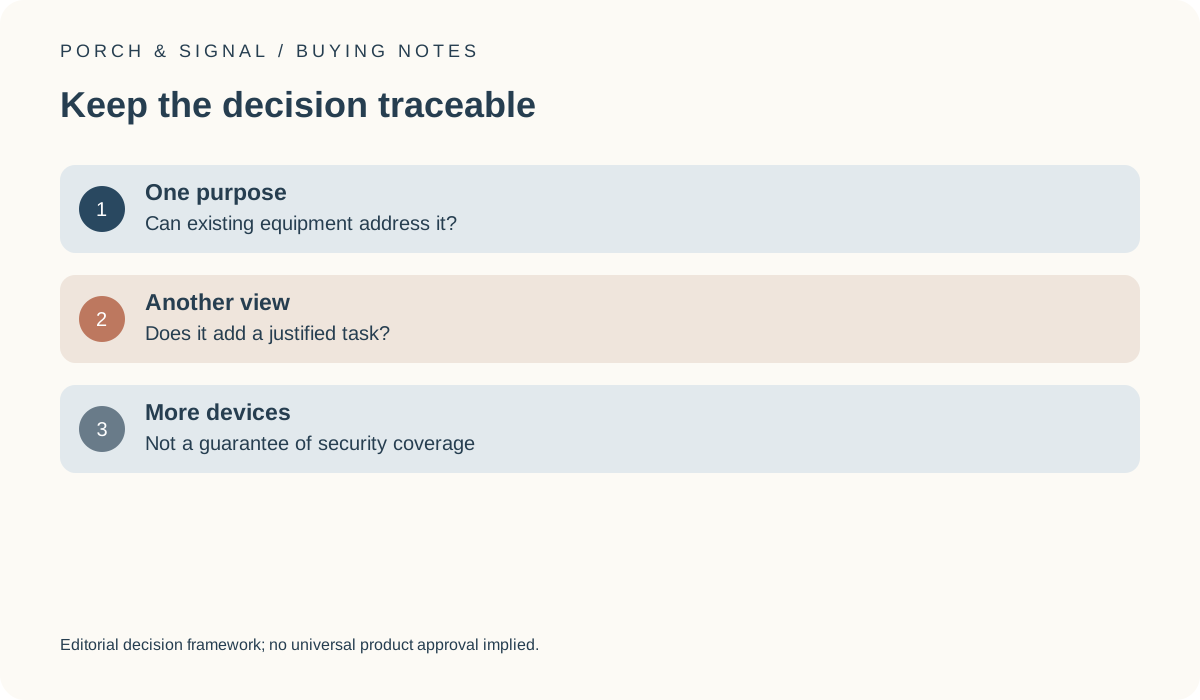
Assign each proposed camera a distinct purpose and ownership cost instead of equating more devices with complete protection.
Updated:
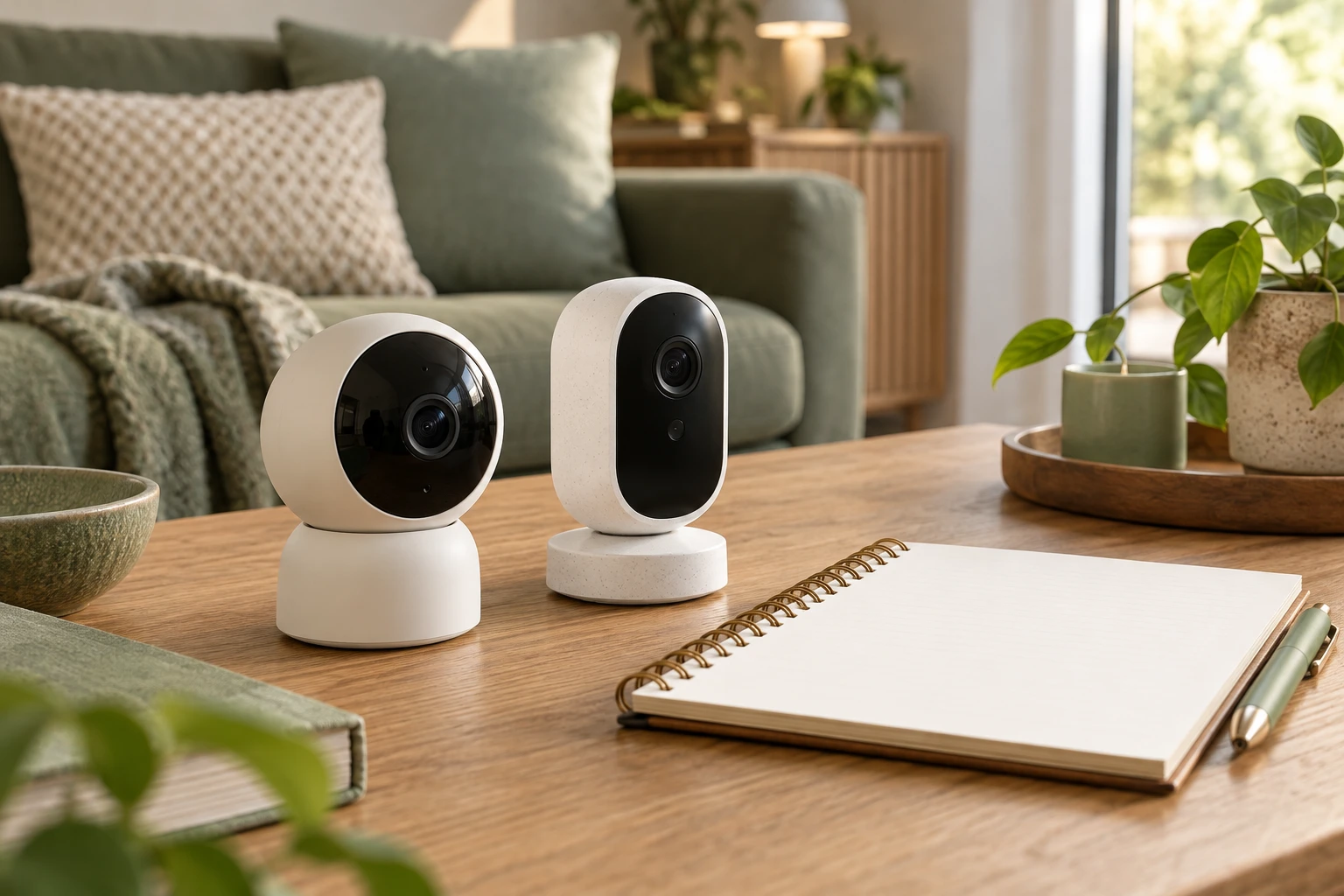
Give each proposed camera a separate job
Begin with the questions you need to answer, not a target camera count. For each proposed device, write the distinct purpose and why existing equipment does not already meet it. Several devices aimed at similar activity can add recordings and management work without resolving a new need. A package containing more cameras is not automatically a better fit for a household.
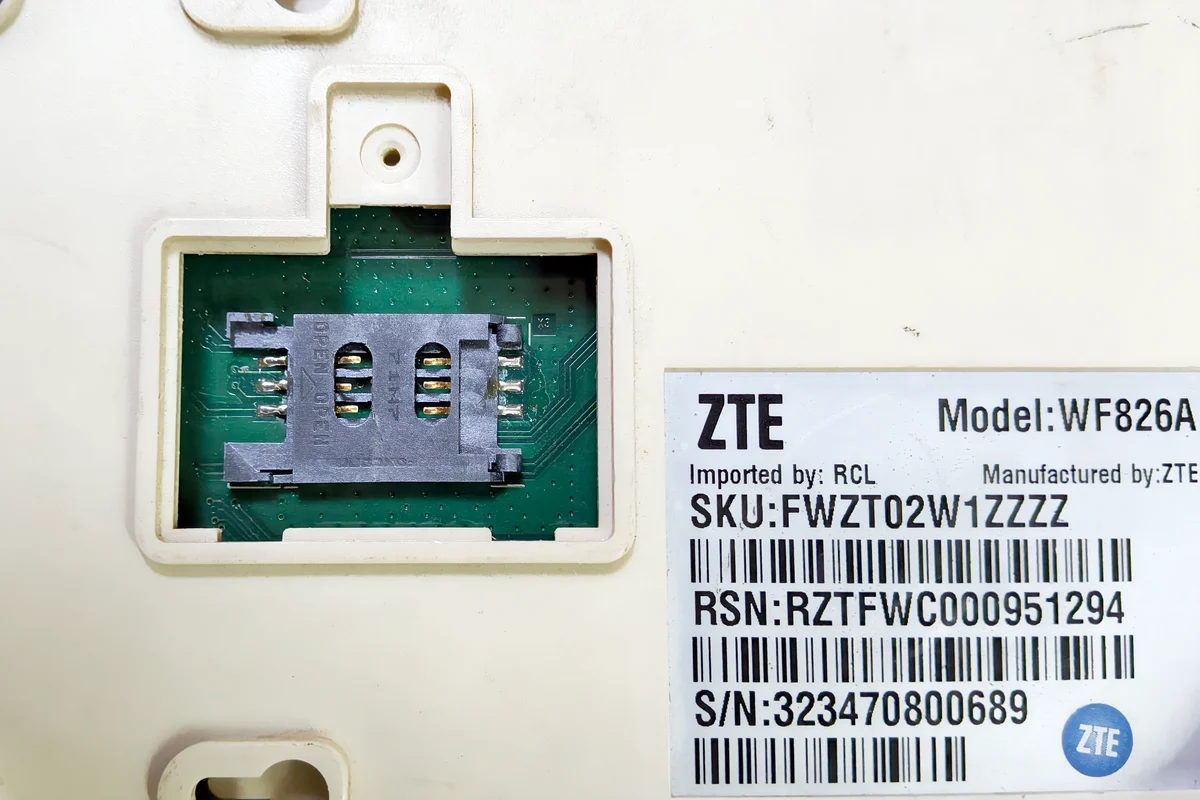
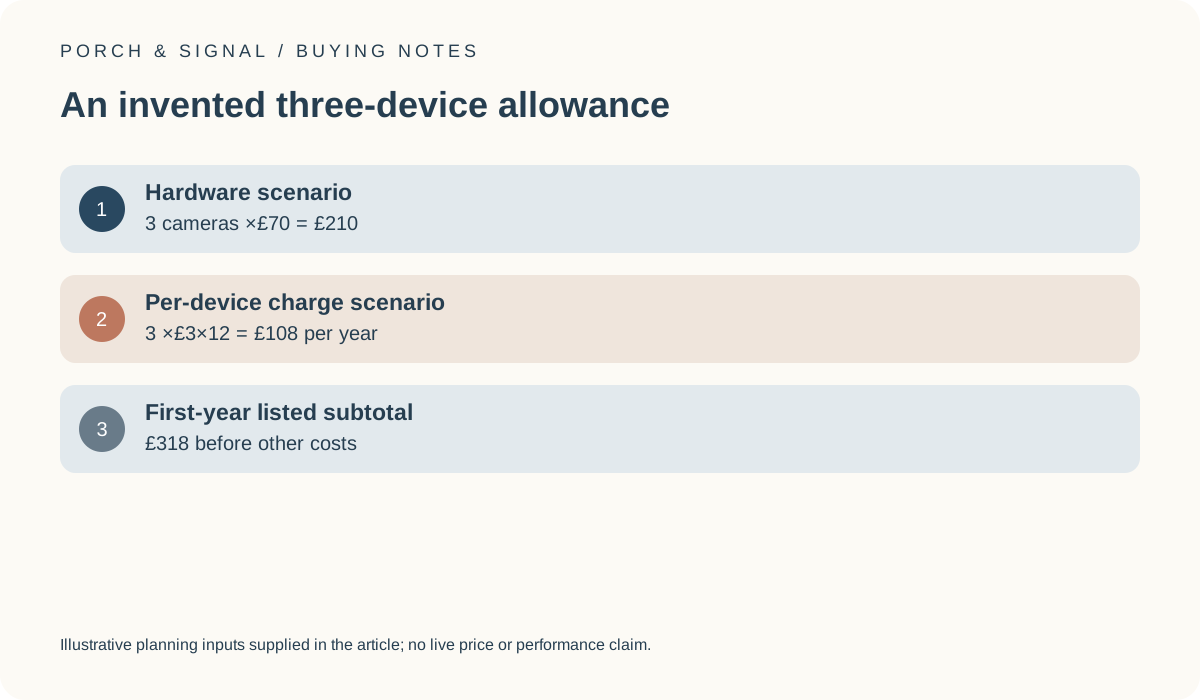
Keep the plan deliberately limited. It is a buying record, not a tested security-coverage map or a guarantee that every event will be captured. The archival camera photo identifies a physical device only. It does not establish a coverage area, image quality, detection reliability or an appropriate position on a domestic property.
Show how quantity changes the stated costs
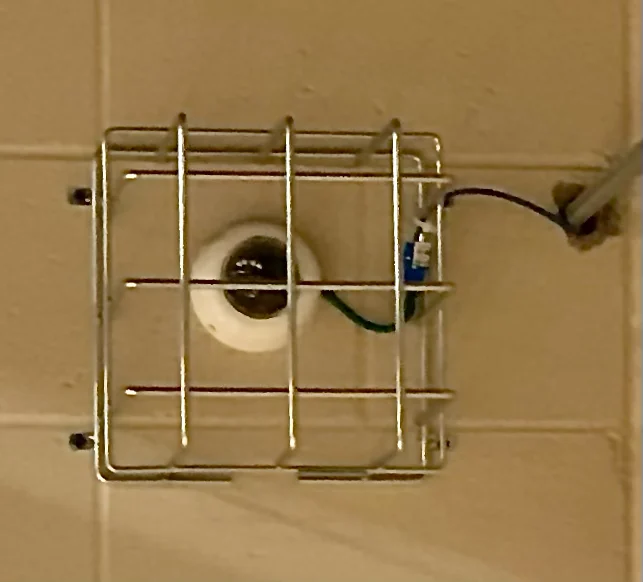
In an invented example, 3 cameras at £70 each cost £210. If a hypothetical service charges £3 per device per month, 3 devices create an annual service allowance of £108. The first-year listed subtotal is £318 before installation and other expenses. These are illustrative inputs, not current offers or a description of any provider’s pricing structure.
A real plan may charge differently, so retain its actual device and account limits. Do not multiply a single-device price when the applicable plan uses another scope, or assume an unlimited-device phrase includes every property or feature. The arithmetic should follow the documented service terms, not the other way around.
Review overlap as a privacy and usefulness question
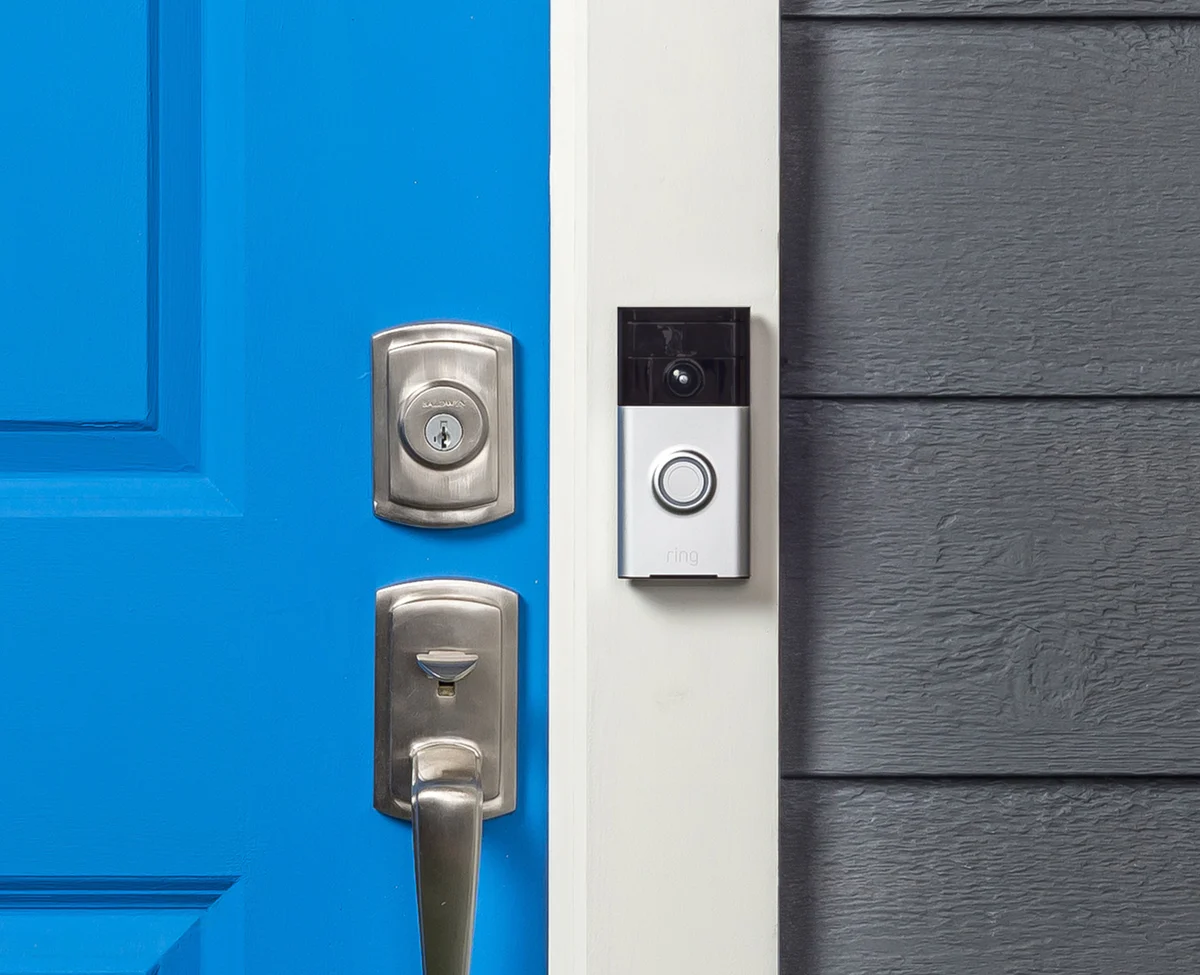
An existing video doorbell may already serve a visitor-facing purpose. A second camera needs its own reason, rather than being added merely because it is included in a bundle. Consider whether another recording introduces more intrusion or records the same activity without answering a distinct household question. The ICO home-CCTV guidance is the official reference for responsibilities in the actual use case.
This article does not determine legal compliance or specify a surveillance layout. It asks the buyer to preserve purpose and scope before comparing quantities. A domestic product label does not make every proposed recording arrangement appropriate, and a larger count cannot substitute for a considered review of what should and should not be captured.
Keep shared dependencies separate from the count
Several cameras can depend on shared network equipment, accounts or storage arrangements. Identify those dependencies from the exact product and service information. A router photograph cannot prove capacity or compatibility, and a camera count alone does not determine recording volume. Resolution settings, recording mode and actual use can change the data involved.
The TP-Link UK example separates a named camera’s storage choices from its other features. It is not a specification for every system or a promise about a multi-camera installation. If an important network or storage condition is unresolved, keep it visible before purchasing additional devices. Avoid turning the existence of a connection into a claim that the proposed number will operate reliably.
TP-Link UK: Tapo C120 product information ?
Choose a quantity you can explain and manage
List the purpose, dated source information and ownership tasks for every candidate device. Include account administration, updates and the review of recording choices where relevant. A household should be able to explain why each device remains necessary rather than preserving an arbitrary number because it was part of the original package.
The useful final result may be a smaller initial purchase, a different device category or a decision to obtain more evidence. It should not promise complete protection, crime prevention or a measured elimination of blind spots. Revisit the purpose list when the household arrangement or property changes, and keep the costs and recording assumptions attached to the devices actually retained.