Review door and window contact-sensor fit
Use the exact component instructions and an appropriate property assessment instead of guessing from a magnet’s appearance.
Updated:

Identify the actual opening and component
A contact-sensor purchase needs the exact component instructions and an understanding of the door or window involved. Normal movement, available surfaces and the permitted arrangement matter to fit. Do not guess installation distances or compatible materials from an archival photograph. This guide is a pre-purchase review, not a mounting, adjustment or alarm-bypass procedure.
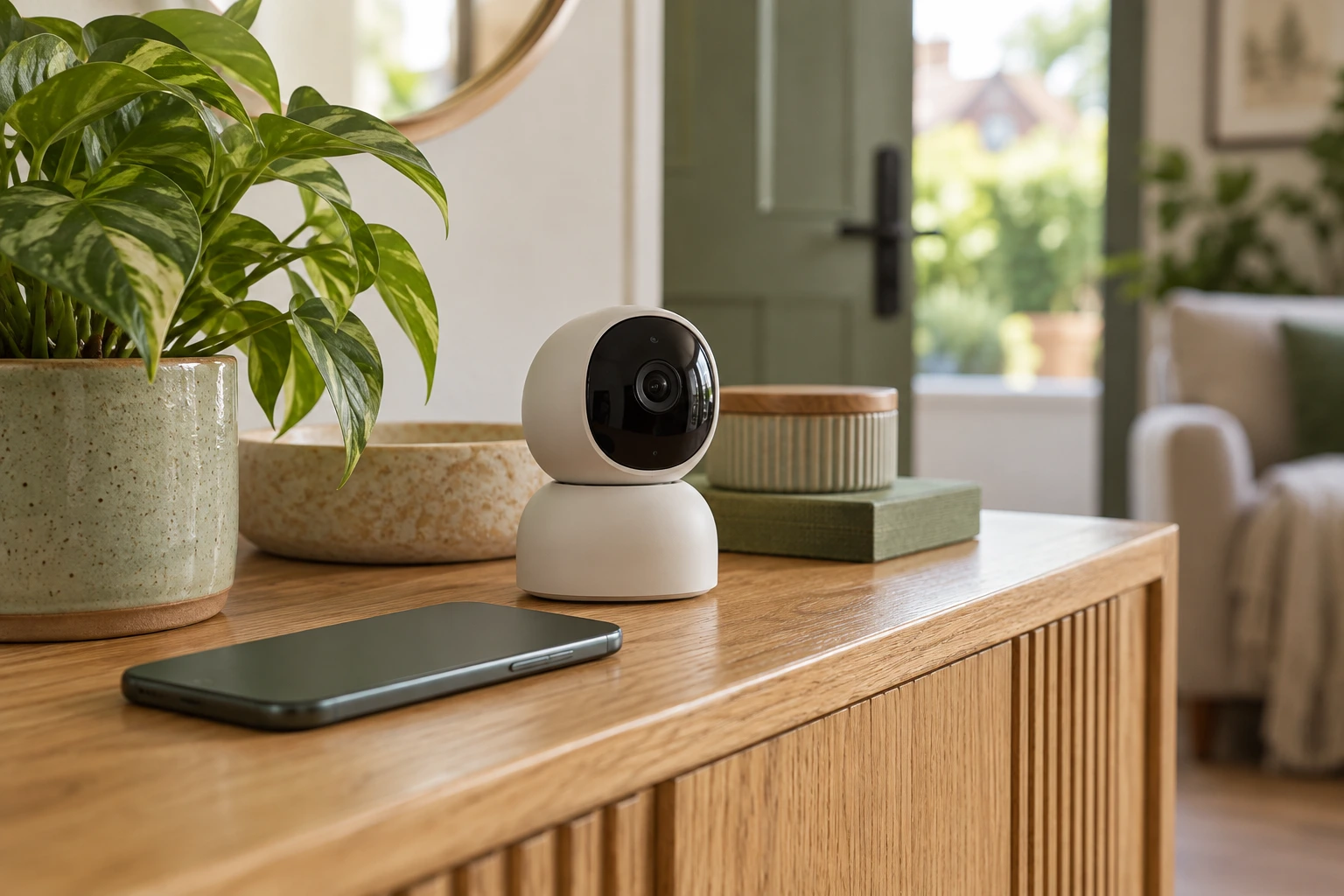
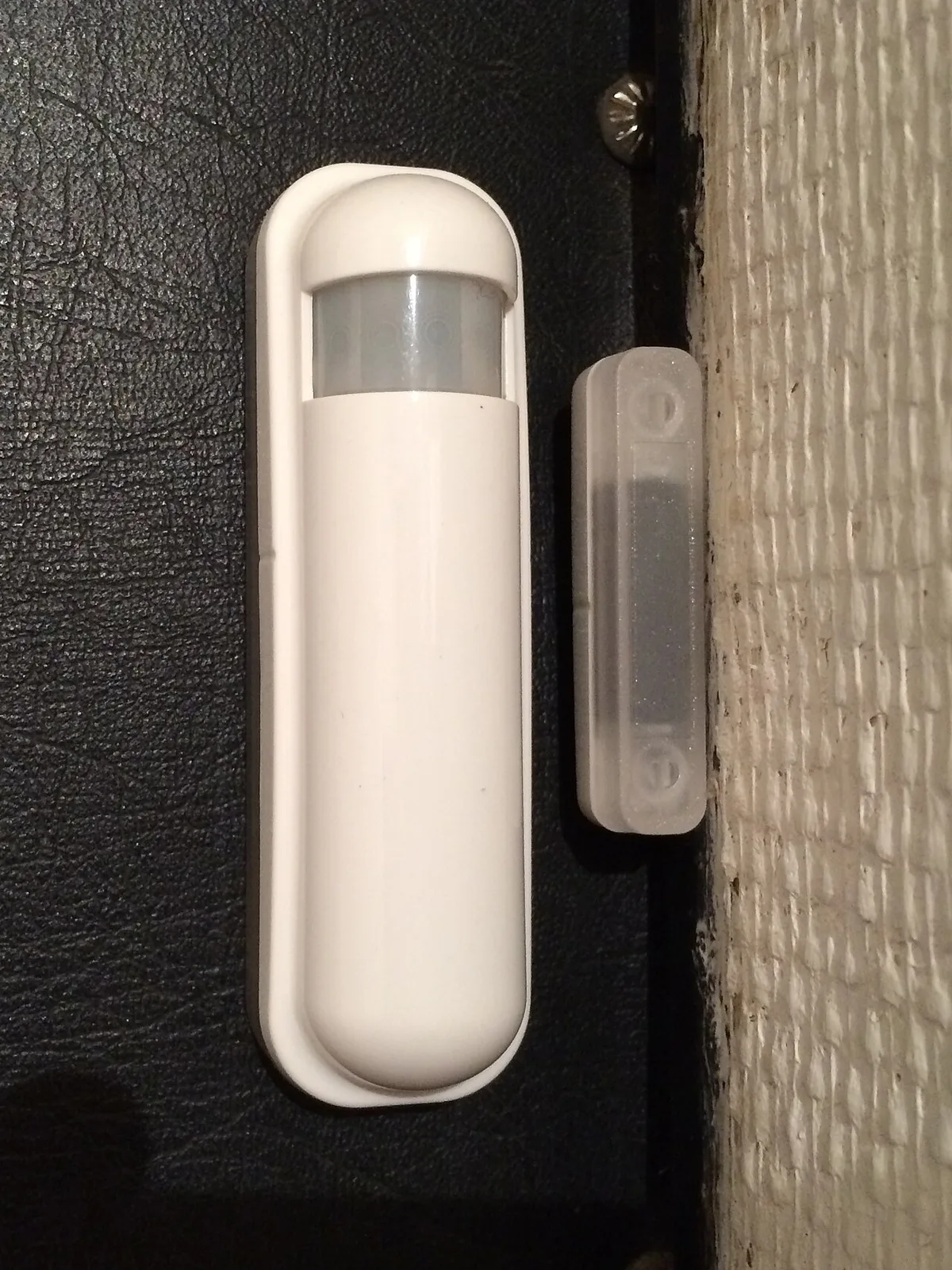
The combined detector and separate magnet shown here are not the Ring product named as a source example. Their purpose is to make the physical pieces understandable. A similar appearance cannot establish that another component has the same installation requirements, event definition or system compatibility.
Cost the documented arrangement after fit is reviewed
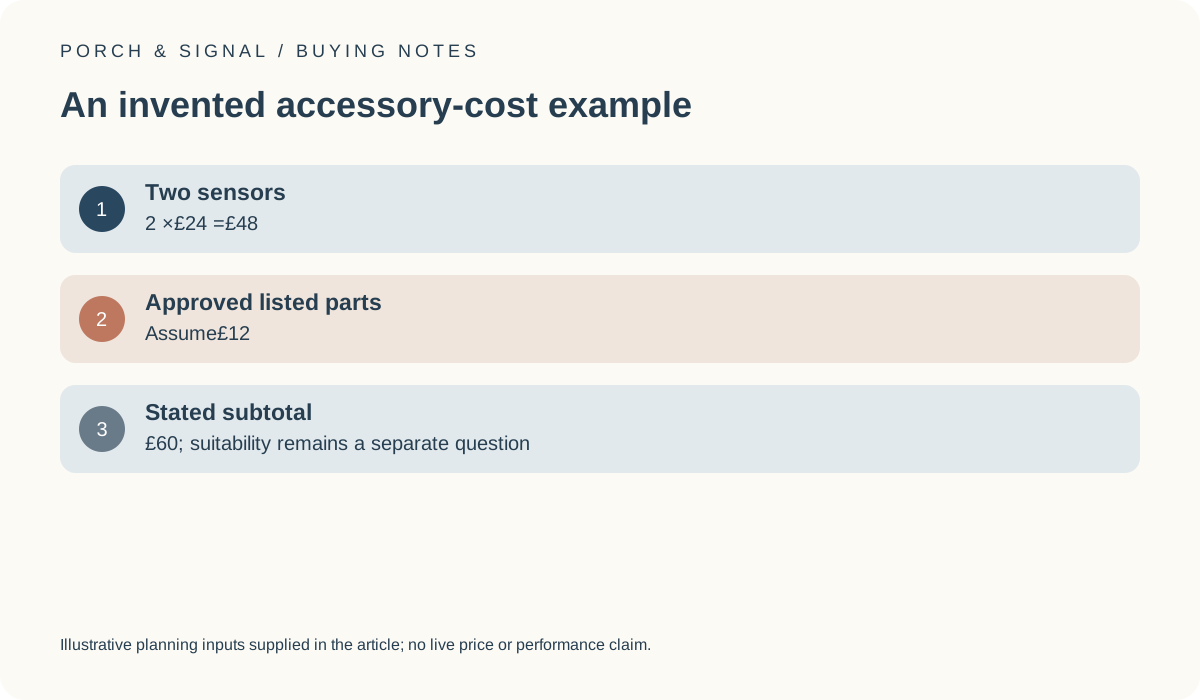
For a purely invented example, two sensors priced at £24 each total £48. Add £12 of approved listed parts and the stated equipment subtotal becomes £60. These are hypothetical amounts, not current prices or advice that a particular opening requires those parts. The cost calculation does not establish physical suitability or the number of components needed at a property.
Keep an actual quote’s included items, tax treatment and installation scope explicit. A low accessory price is not useful if the product belongs to another system generation. Record compatibility first, then add the appropriate quoted costs. Do not improvise extra components or mounting changes on the strength of our arithmetic example.
Keep opening detection separate from motion detection
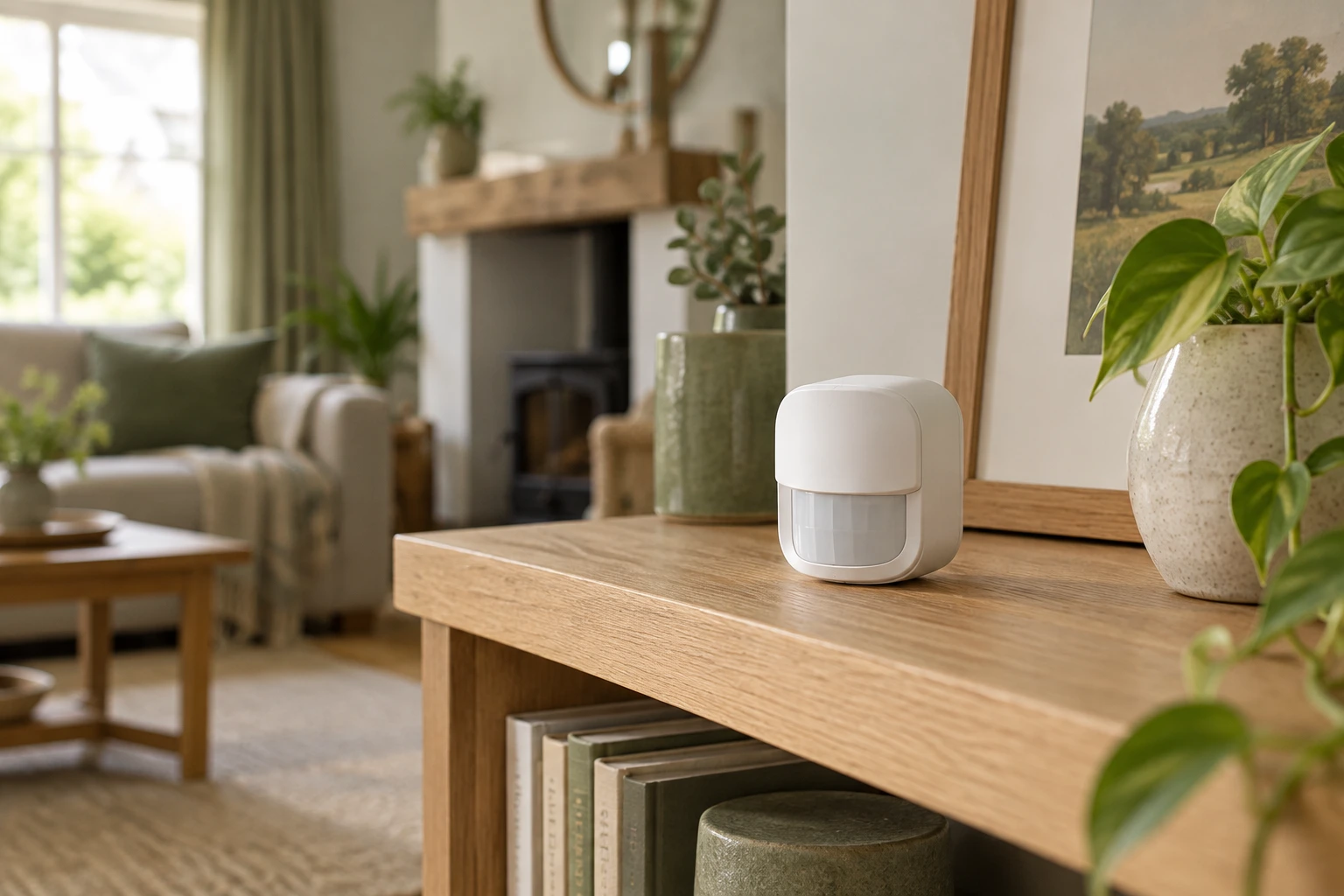
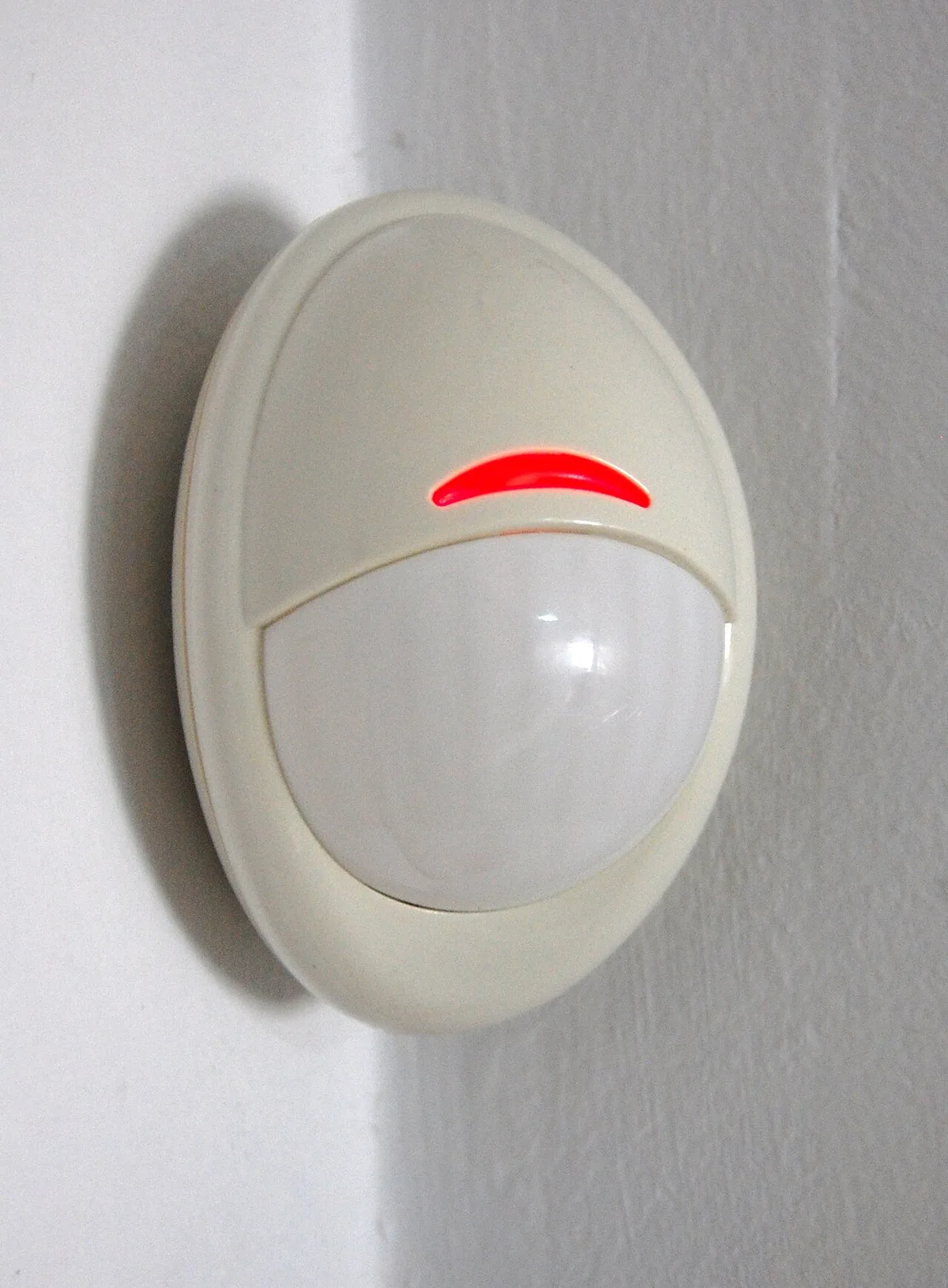
An opening-related event and movement within a space are different descriptions. Read the exact manufacturer’s definition for each component rather than allowing a generic sensor label to blur the distinction. The PIR photograph illustrates a different physical form; it does not provide detection-range evidence or show where any device should be installed.
A useful purchase record names the component’s intended role and what remains outside it. It should not claim that one opening sensor replaces all other security measures or guarantees that every relevant event is detected. If a seller’s description leaves the event type unclear, keep the question unresolved instead of combining it with features from another product.
Check the complete system dependency
Ring’s UK contact-sensor listing identifies a required Ring Alarm Base Station. Preserve that relationship when reviewing the exact product. It does not imply that every sensor works with that station or that a standalone component creates a complete alarm system. Keep region, generation and the written compatible-device information with the actual quotation.
An existing base station in the home is not enough evidence by itself. Compare the supported component relationship rather than assuming that shared branding establishes fit. If the proposed package mixes suppliers or revisions, the compatibility claim needs its own applicable documentation. Our worksheet does not test radio connection, notification delivery or an installed alarm arrangement.
Ring UK: Alarm Contact Sensor requirements ?
Include owner responsibilities in the final decision
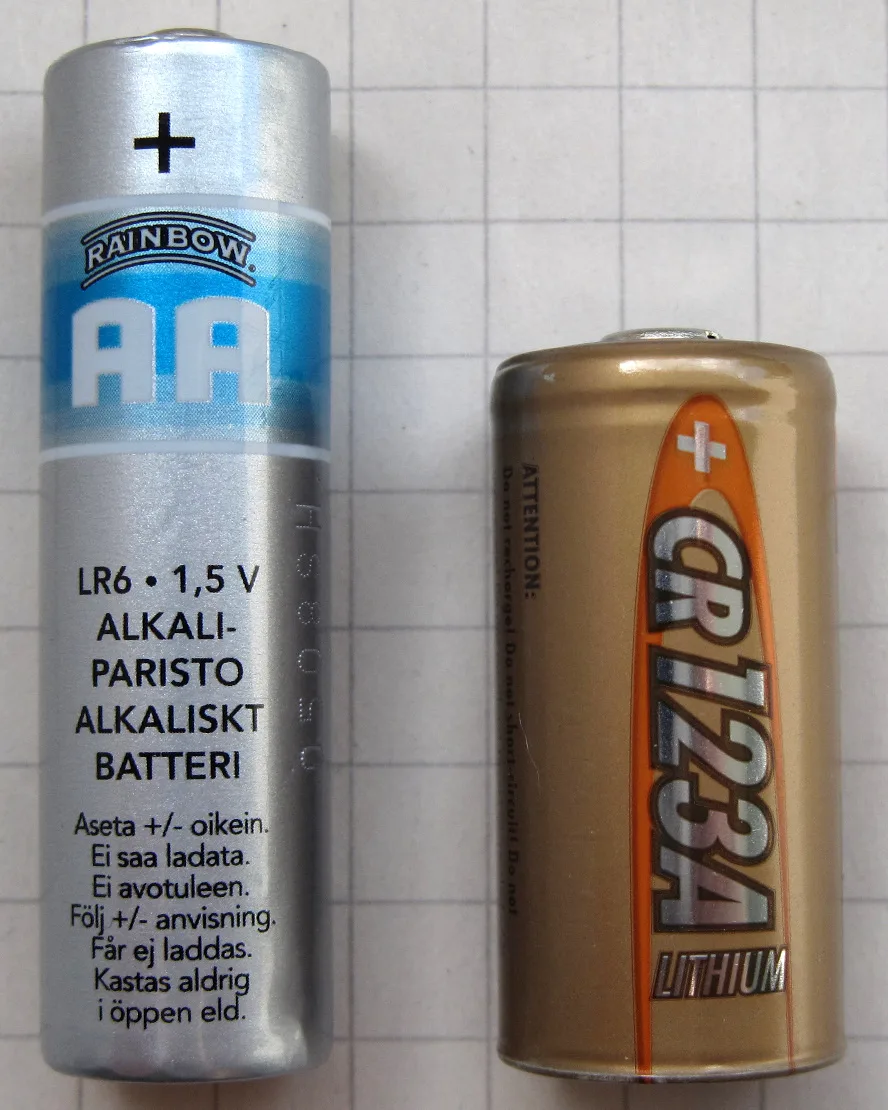
Read the documented ordinary-care requirements and identify who in the authorised household will manage them. Keep supply identifiers, support information and the actual manual available. Do not treat a low-maintenance marketing phrase as proof that no checks or replacement work will ever be needed. The battery photograph is identification context only and does not authorise interchangeability.
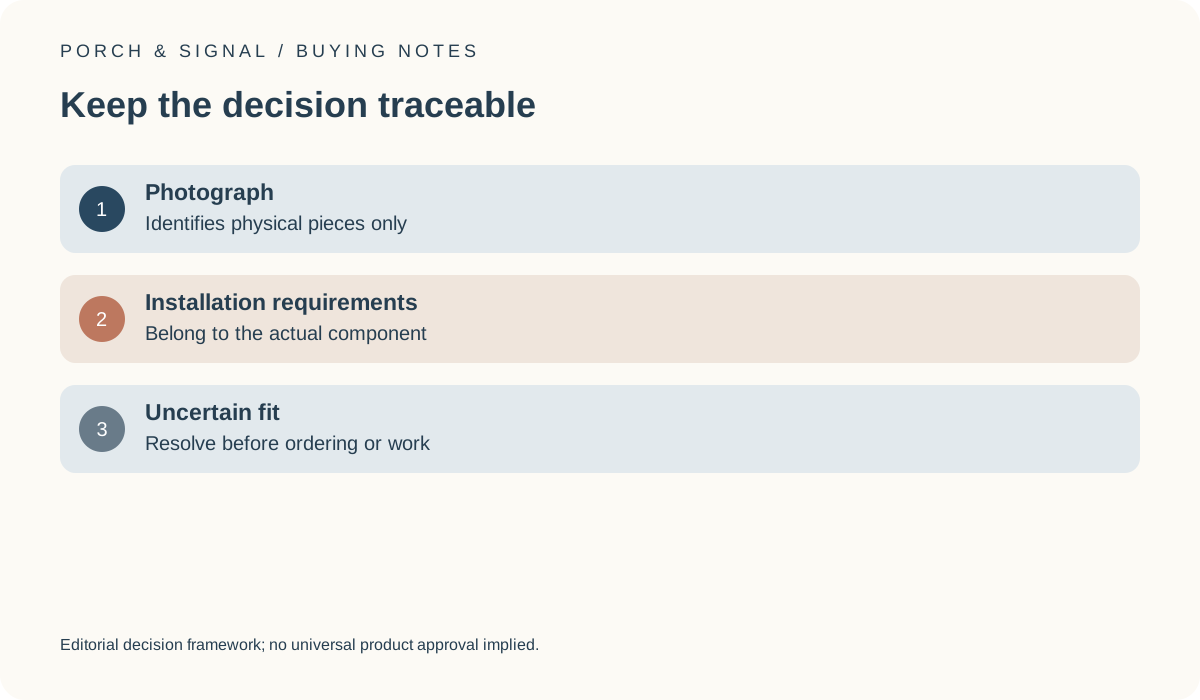
The final shortlist should distinguish physical fit, system fit and ordinary ownership work. A candidate remains unresolved if one of those conditions has not been established. This is more useful than assigning a universal compatibility score, and it avoids presenting an illustrative component photograph as a tested installation or a guarantee of protection.