Define the role of an alarm sensor
Separate what a component detects from the base station, account, notification and response arrangements it needs.
Updated:
Give the component a narrow description
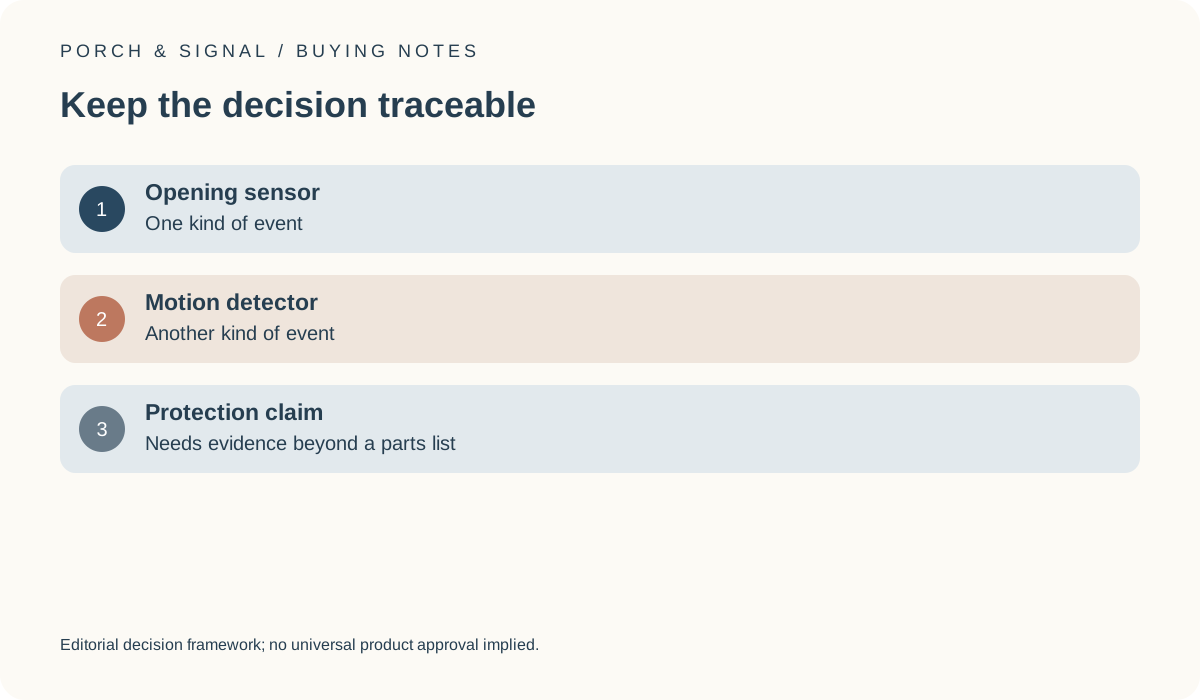
Start by stating what the exact sensor is documented to report. An opening sensor and a motion detector are not interchangeable simply because both appear in an alarm category. Keep the event or status separate from what the wider system does with it. A parts list alone does not establish complete property protection or a suitable response arrangement.
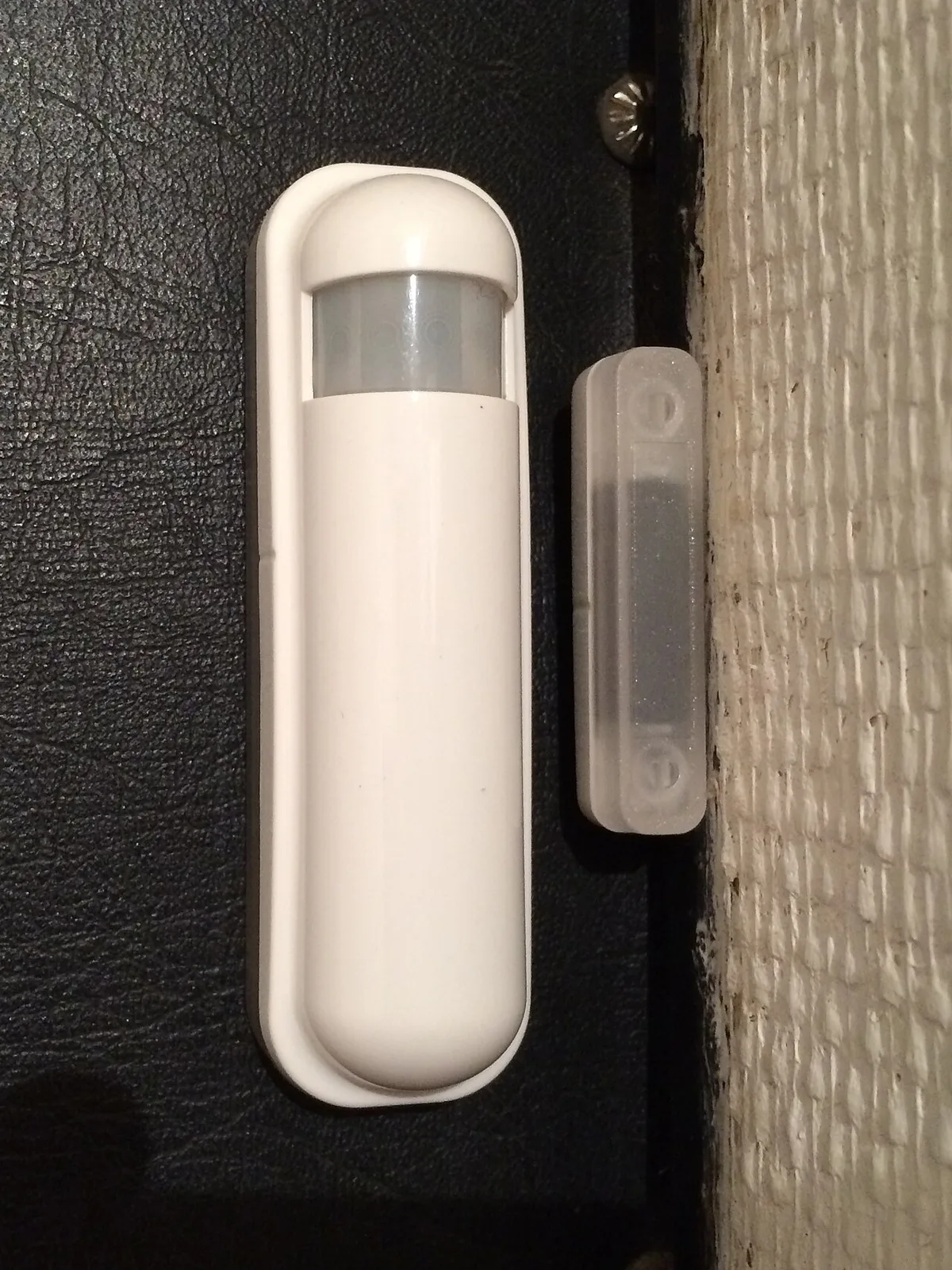
The combined detector photograph identifies a physical component and a separate magnet. It is archival context, not the Ring device used as a manufacturer example. Do not infer installation gaps, placement, range or performance from the picture. The useful buying question is what role a candidate component has within its documented system.
Include the system that makes the component useful
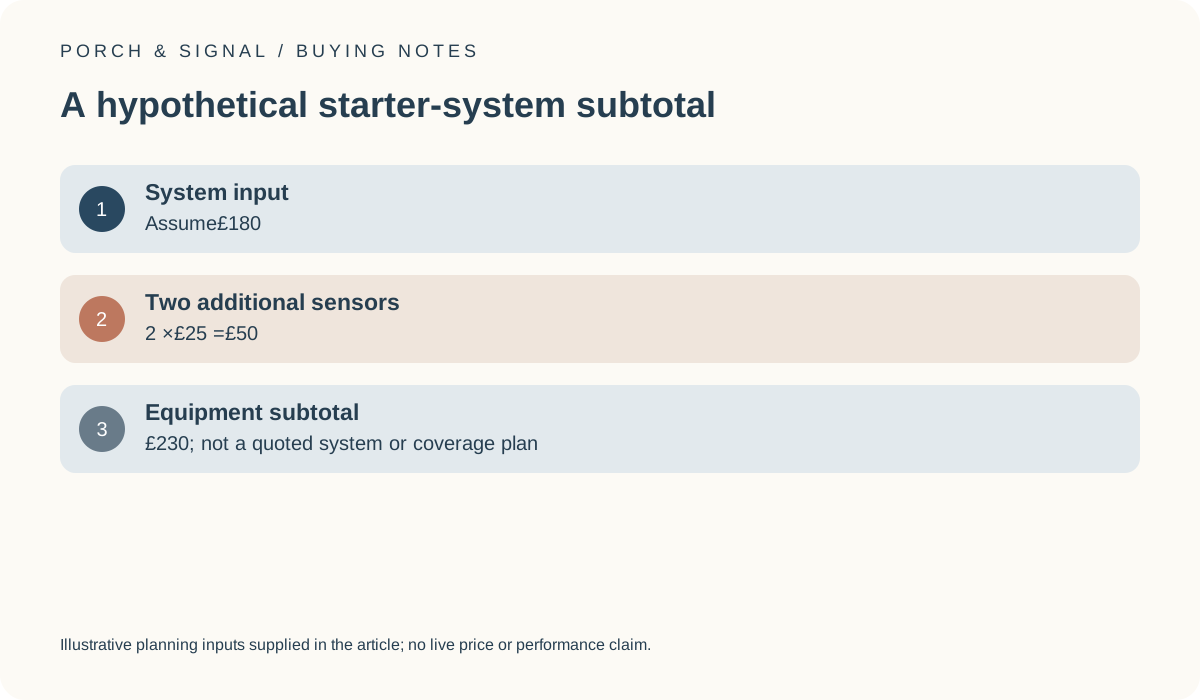
For a hypothetical subtotal, assume a starter system costs £180 and two additional sensors cost £25 each. The added sensors total £50, producing £230 of listed equipment. These are invented prices, not a current offer, a coverage calculation or a recommendation about how many sensors a property needs. Installation and any service charges remain separate.
Read the actual included-parts list and compatibility information. A discounted component can be an unsuitable purchase if the required base station or service is missing. Keep the system generation and region in the record rather than assuming every accessory carrying a familiar brand name belongs to the same installation.
Preserve the requirement in the UK manufacturer example
Ring’s UK Alarm Contact Sensor listing requires a Ring Alarm Base Station. That is a product-specific dependency, not evidence that every contact sensor uses the same system or that the component is a standalone alarm. Retain the exact model and applicable source when comparing bundles. A marketplace title should not replace the manufacturer’s compatibility information.
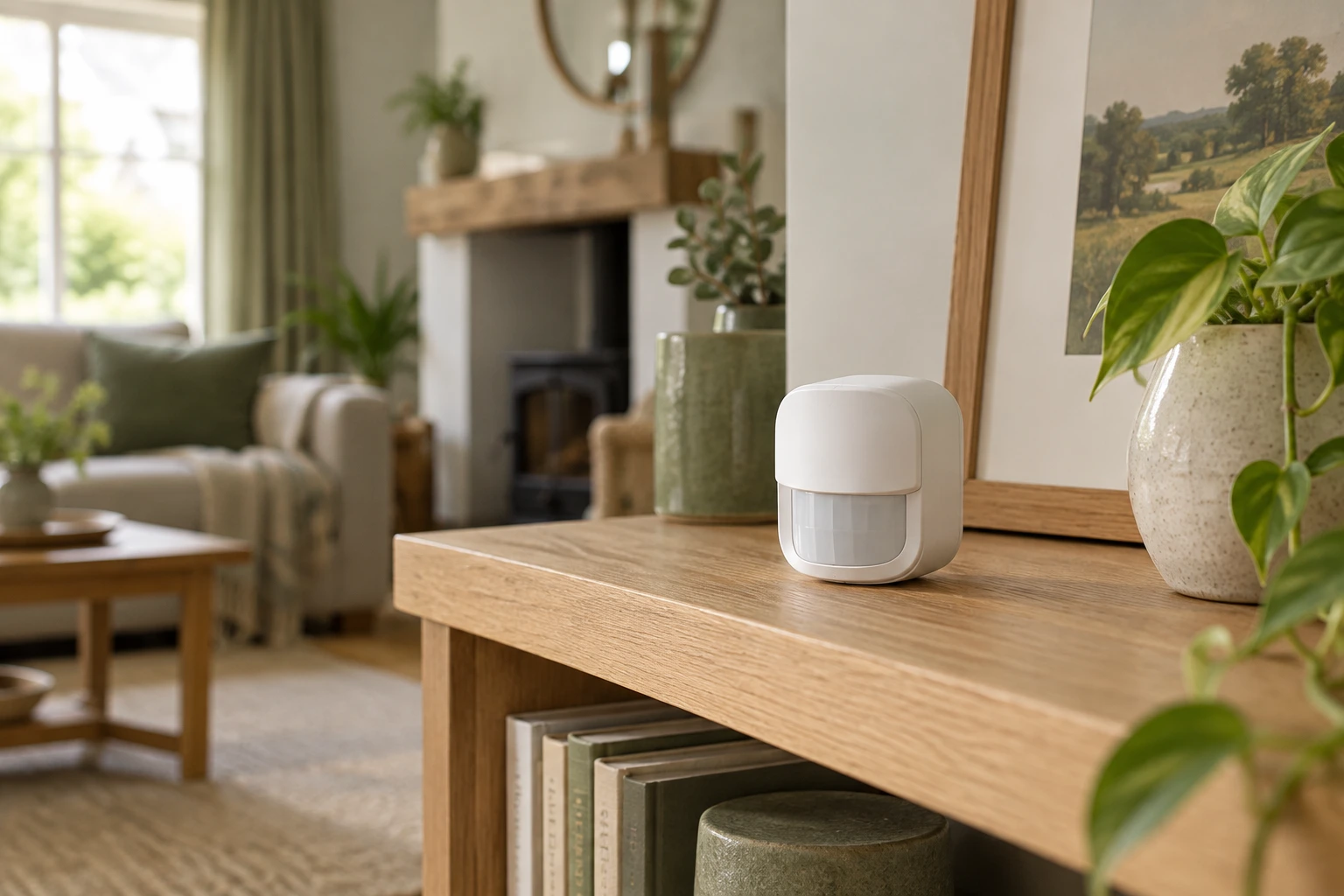
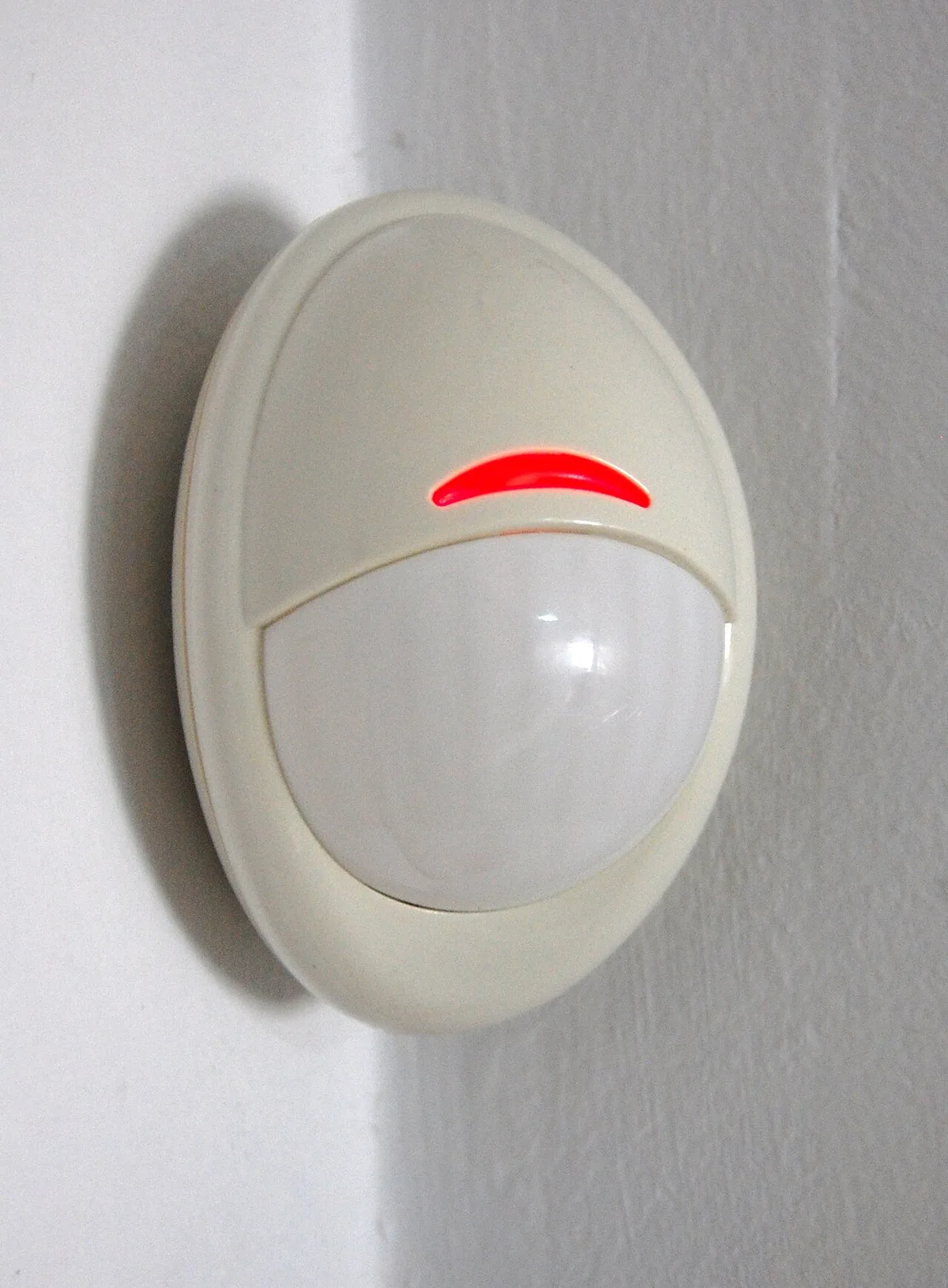
The separate PIR-detector photograph helps distinguish another sensor form, but it does not establish interchangeability. It should not be used as a substitute installation diagram or a tested specification. If the relationship between a candidate sensor and the proposed system is unclear, leave the compatibility question unresolved before adding it to the quotation.
Ring UK: Alarm Contact Sensor requirements ?
Keep notification and response as separate decisions
Identify how the associated system communicates a sensor event and what service, account or connection it requires. Do not infer professional monitoring from the existence of an app notification or a siren label. If monitoring is being purchased, its scope belongs in a separate review. This guide does not provide emergency-response advice or promise that a detected event produces a particular outcome.
Also establish who is authorised to manage the household system. The NCSC smart-device guidance is relevant to ongoing settings and software care, but it does not certify an alarm design. Keep those administrative responsibilities visible instead of treating installation as the end of ownership work.
UK NCSC: Smart devices in the home ?
Plan ordinary care without publishing sensitive details
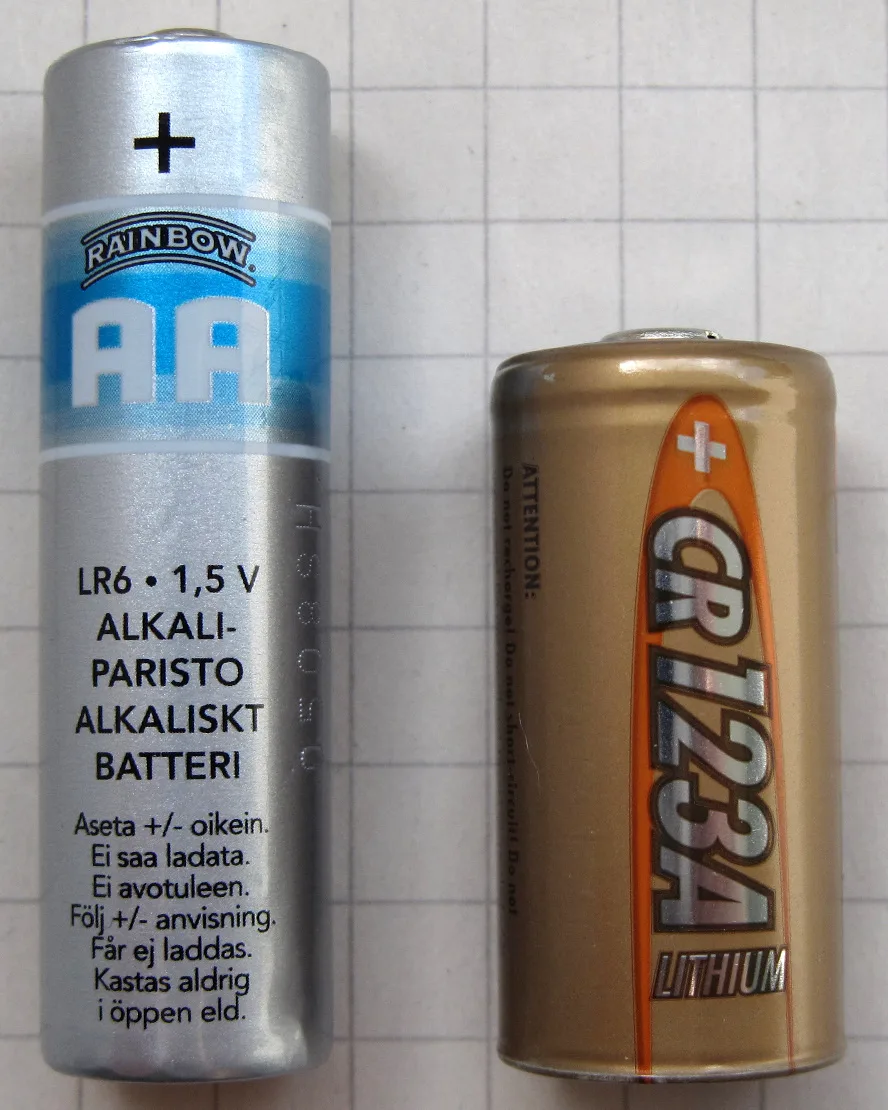
Review the exact instructions for ordinary checks, updates and any specified replacement supplies. Do not publish account credentials, private system details or a property’s sensitive configuration in a public buying worksheet. The battery photograph shows that physical supply forms differ; it is not advice to substitute one battery for another or an instruction for accessing a sensor.
The final comparison should explain the component’s documented role, required system and recurring responsibilities. If an important condition remains unknown, do not call the proposed package a confirmed fit. A clear dependency record is more useful than a reassuring feature count or a claim of guaranteed coverage that the available evidence cannot support.