Separate motion alerts from security guarantees
Read what triggers a notification, what evidence it includes and what the owner must still do.
Updated:
Read the event definition before the alert label
A motion, person or activity-alert label should remain with the exact product’s documented definition and conditions. Identify what the device is said to detect and what message the user receives. Do not turn the feature name into a claim of perfect identification, no missed events or guaranteed protection. A notification is one step in a sequence, not the entire security outcome.
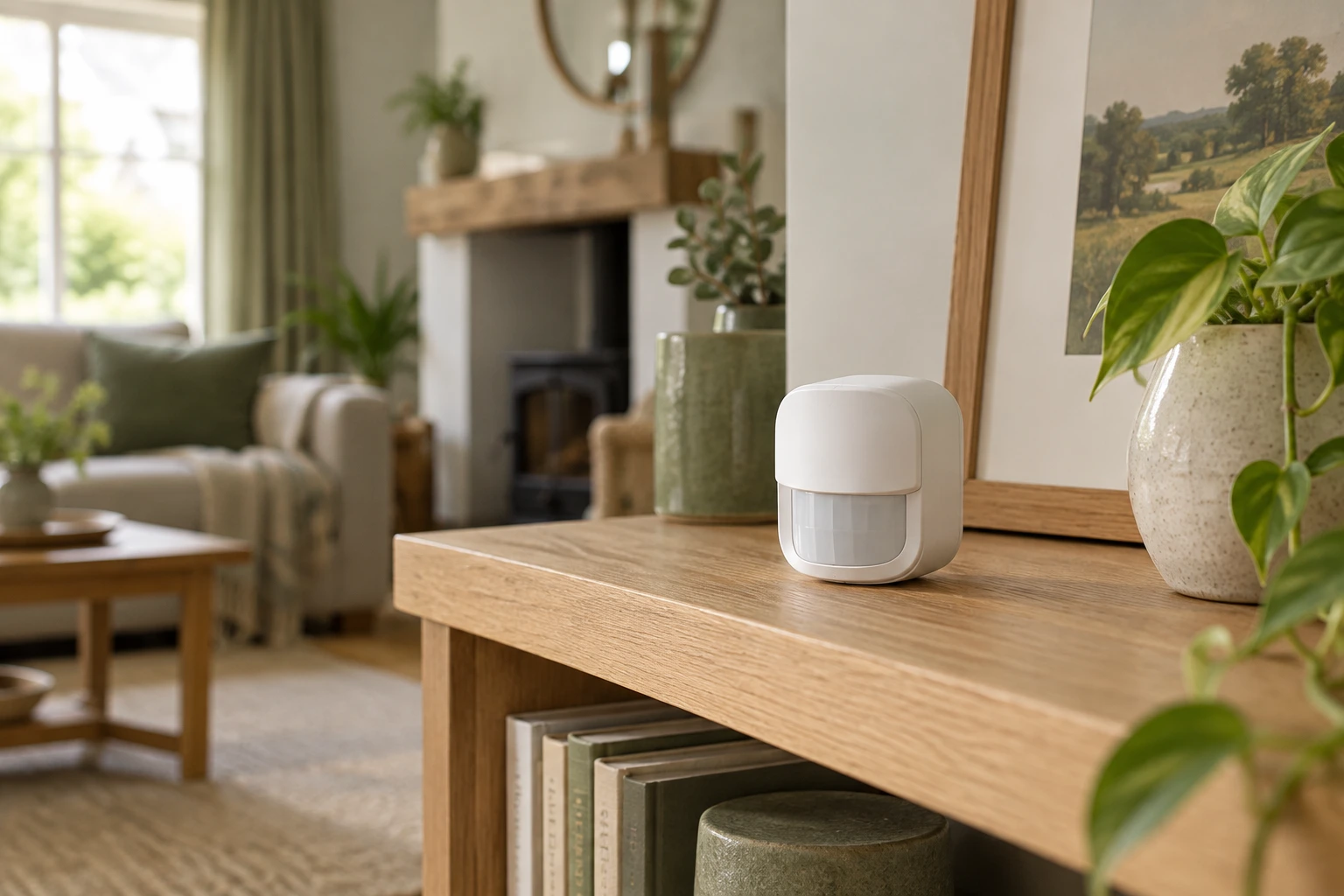
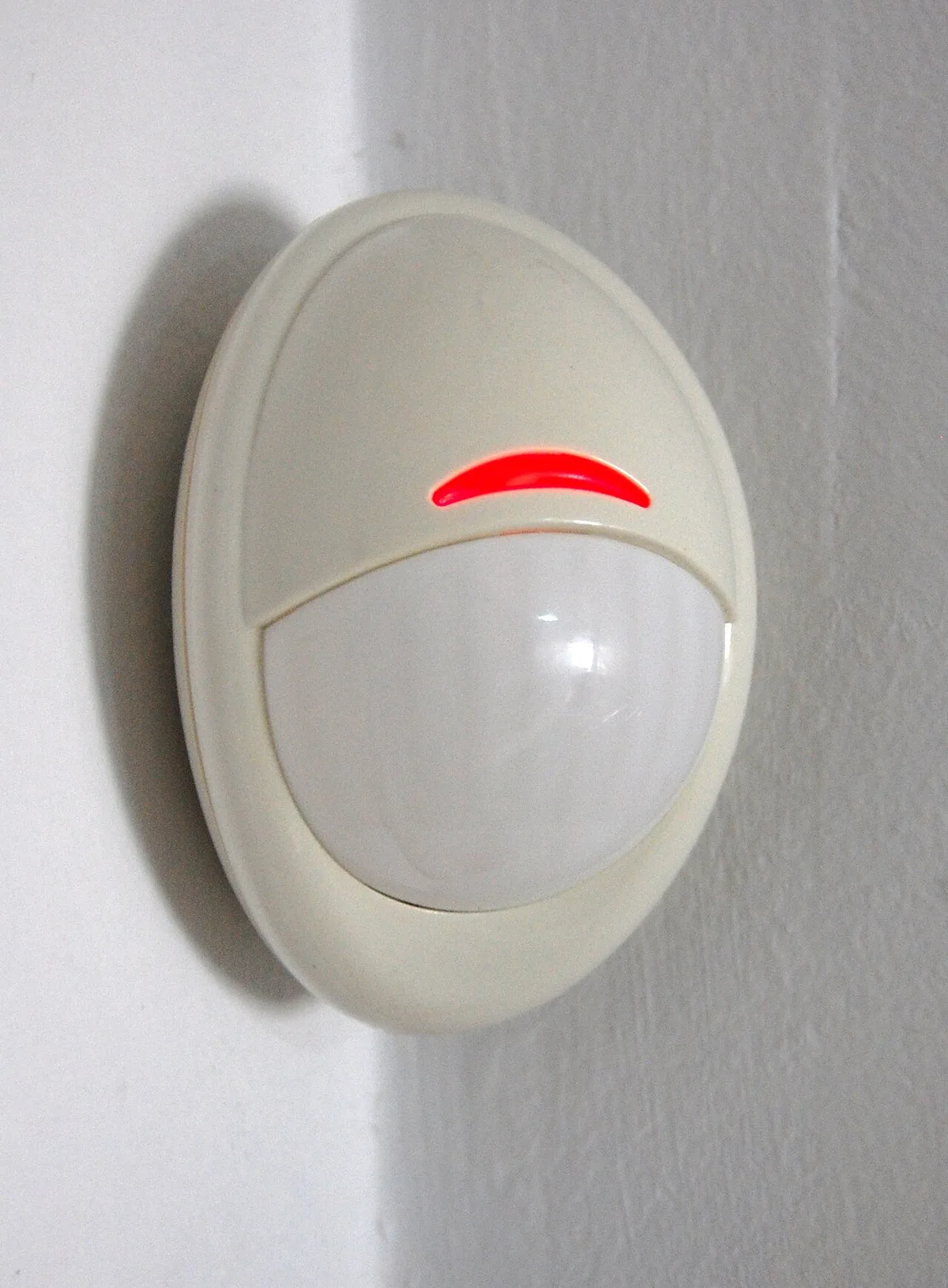
The archived motion detector shows a physical sensor form. It is not a test of a current camera’s software classification and does not demonstrate how an alert behaves in your home. Keep the distinction between a visible component, a manufacturer statement and measured performance explicit when comparing candidates.
Estimate attention as a personal input
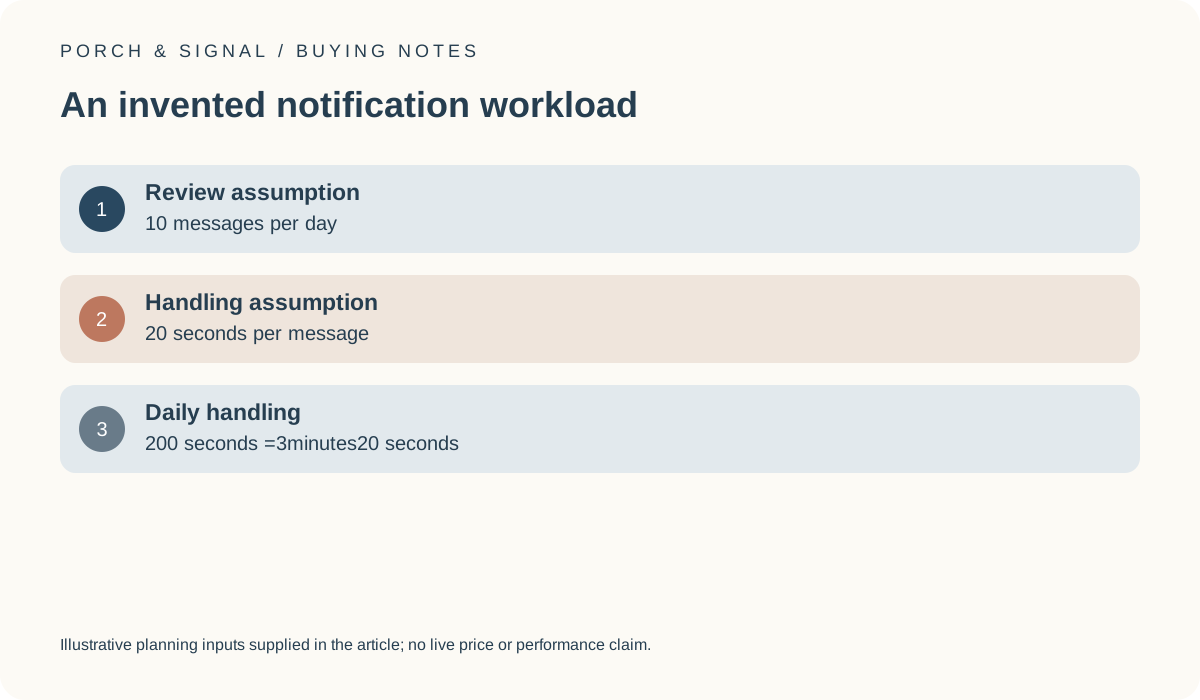
For an invented workload example, assume 10 messages each day and 20 seconds to review each one. That is 200 seconds, or 3 minutes and 20 seconds of daily handling. Over 7 days at that assumed rate, the handling total would be 1400 seconds, or 23 minutes and 20 seconds. These are hypothetical inputs, not observed alert volumes or a prediction for a particular device. The example shows why an attention-demanding feature deserves a place in the ownership routine.
If your actual use later produces a different volume, update the assumption rather than claiming the guide measured it. Do not infer a false-alert rate from this arithmetic. A meaningful accuracy claim requires appropriate evidence and conditions; a message count alone cannot establish whether important events were missed or correctly identified.
Check what accompanies the notification
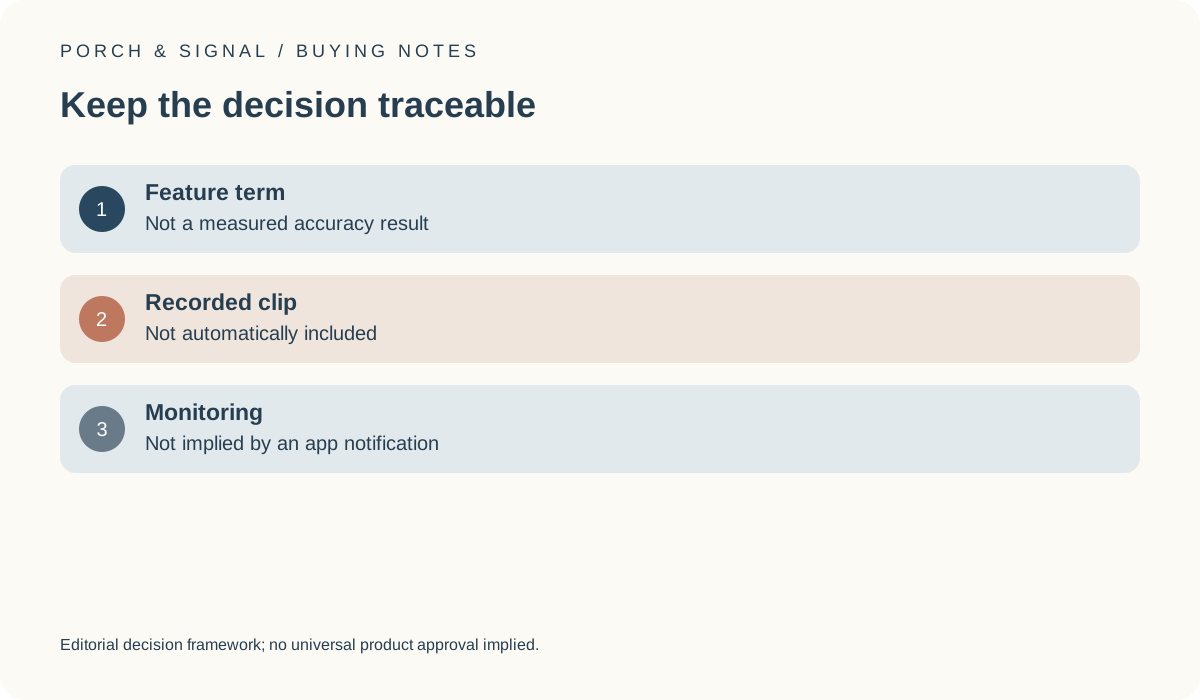
Determine whether the message includes a live view, a snapshot, a recorded event or only a status notice under the exact plan and settings. Keep subscription and connection dependencies beside the feature. TP-Link’s UK C120 page is an example of product information that distinguishes storage and notification-related features, but it does not establish a universal arrangement for all cameras.
An archival camera housing cannot reveal which features are enabled or included. Save the applicable product and service information with the purchase record. If the required evidence is not available under the proposed plan, do not silently treat an app alert as though it includes a retained recording. Keep that feature question unresolved before comparing prices.
TP-Link UK: Tapo C120 product information ?
Distinguish an alarm sensor from a camera classification
A contact sensor, a motion detector and a camera can report different event types. Ring’s UK contact-sensor information is an example of a component requiring its associated alarm system rather than operating as an interchangeable camera feature. Preserve the exact system and device relationship when reading alert claims. Do not combine different products’ descriptions into one imagined capability.
Also distinguish a device notification from a professional monitoring service. If a paid service is part of the offer, review its actual scope separately. This article does not promise a response time or describe an emergency service. The owner’s receiving, reviewing and acting on a message remain different questions from the device detecting an event.
Ring UK: Alarm Contact Sensor requirements ?
Choose alerts that serve the stated household purpose
Write down why an alert is needed, who is authorised to receive it and what information they require. Keep privacy and account choices in the review instead of enabling every available message simply because it is offered. A broader set of notifications can add work and unnecessary exposure without addressing a distinct need.
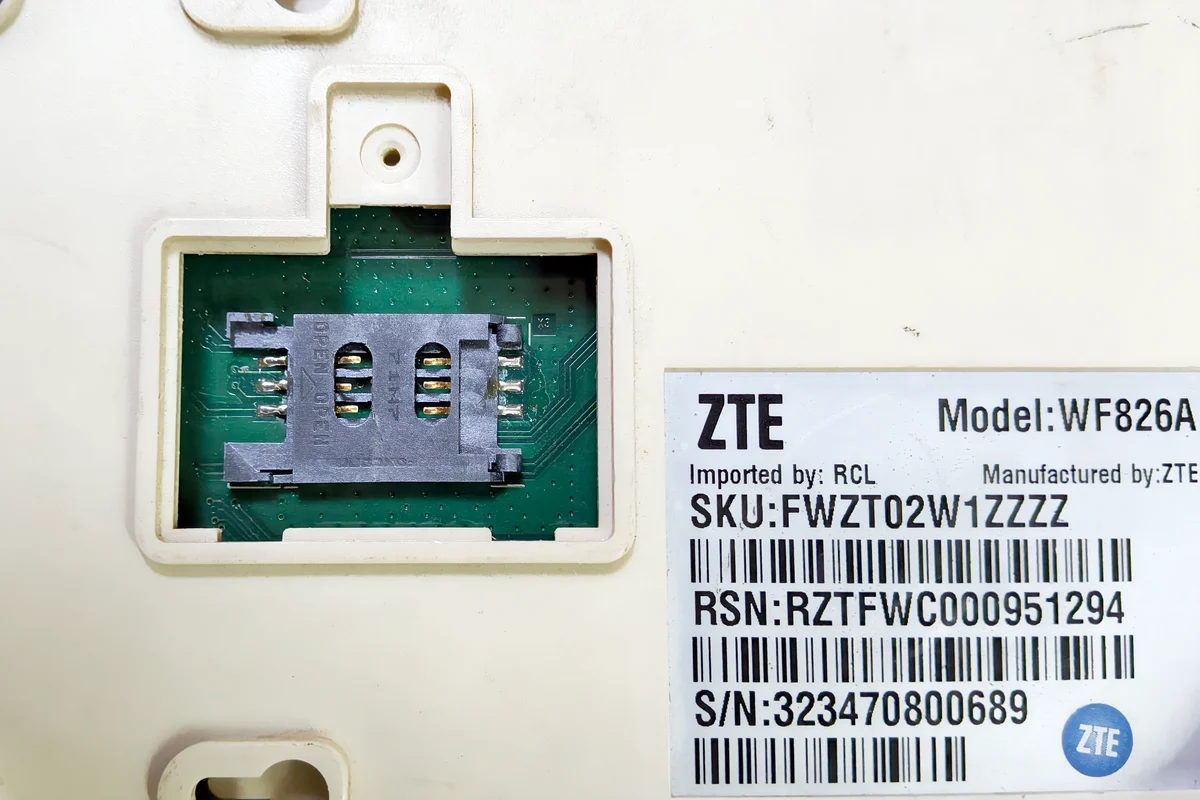
The router photo illustrates one possible connection dependency; it does not prove speed, compatibility or uninterrupted delivery. The final buying record should distinguish the documented event, the notification contents and the separate response arrangement. Avoid describing that record as a test of accuracy, a guarantee of crime prevention or evidence that no additional owner attention is needed.