Give recorded footage a deliberate retention plan
Distinguish a provider’s maximum history from the owner’s reason for keeping recordings and review deletion deliberately.
Updated:

Separate available history from a reason to keep it
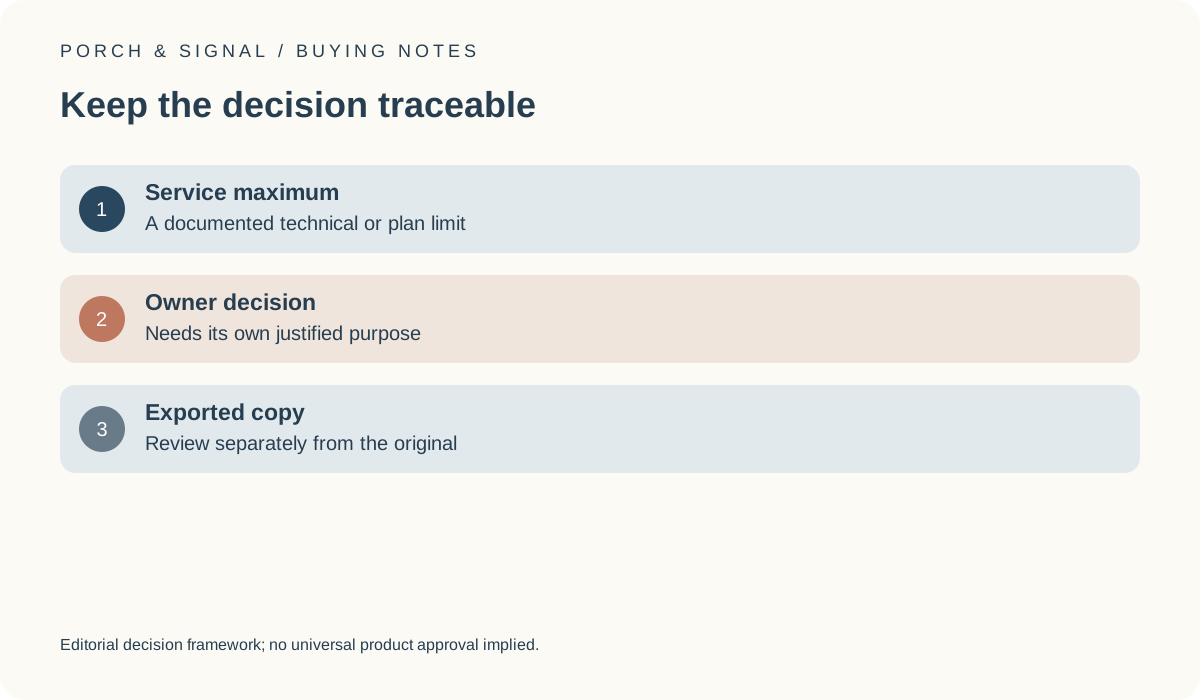
A service offering a maximum recording history does not decide how long the owner should keep every clip. Start with the limited purpose of the recording and the applicable responsibilities, then identify the controls available in the exact product and service. Do not treat a large advertised history as an instruction to retain everything for that duration. A storage feature and a retention decision answer different questions.
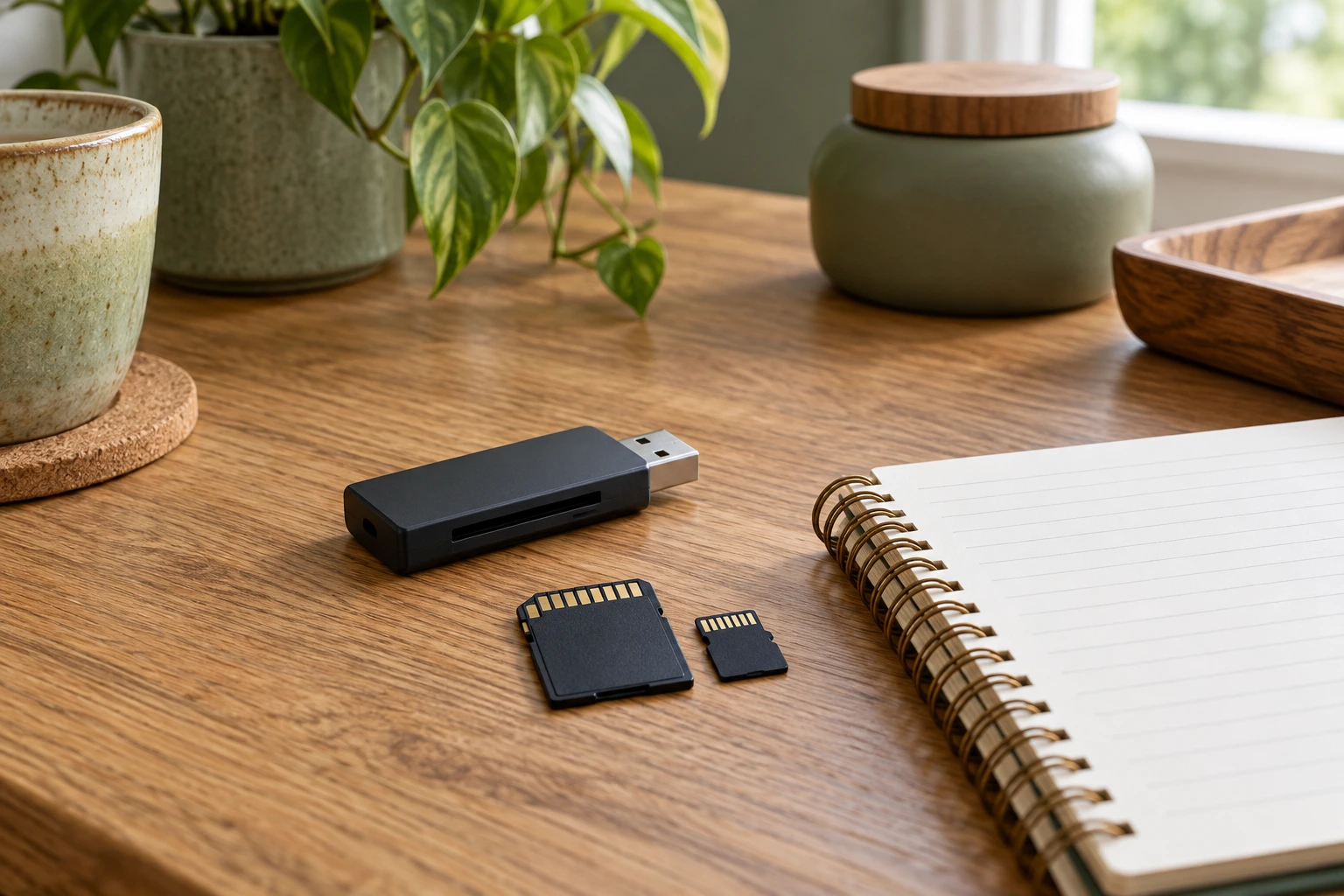
The external reader photograph illustrates physical access to a separate medium. It does not establish how long any camera keeps footage, whether a file has been deleted everywhere or what a provider’s current plan permits. Keep the actual product information and recording purpose in the decision.

Use allocation arithmetic without turning it into a legal period
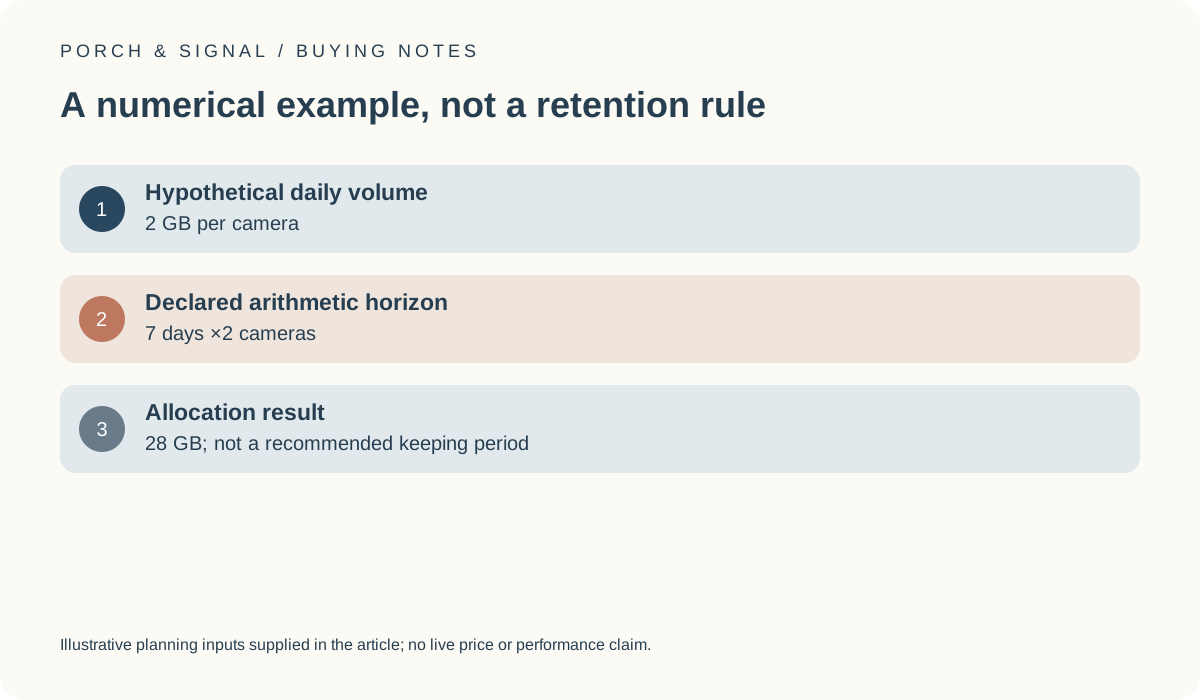
For numerical illustration only, assume 2 gigabytes per camera per day, 2 cameras and an arithmetic horizon of 7 days. Multiplying those declared inputs gives 28 gigabytes. The 7 days are not a recommended retention period, a legal allowance or a prediction of actual recording volume. An arithmetic horizon of 14 days at the same invented rate would instead give 56 gigabytes, showing how the assumption changes the allocation.
Our storage-allocation calculator performs this multiplication without choosing an appropriate keeping period. Actual file size, recording mode and usable capacity require their own evidence. Do not turn a convenient capacity calculation into the reason for retaining more personal footage than the purpose calls for.
Read the UK owner responsibilities from the official source
The ICO home-CCTV guidance is the current official starting point for UK domestic recording responsibilities, including recordings beyond the property boundary. It describes regular or automatic deletion among the responsibilities it explains. This article does not prescribe a universal retention period or decide whether an individual arrangement complies with data-protection law. Read the applicable guidance for the actual use.
Keep the reason for retaining recordings distinct from a supplier’s maximum plan history. If the use involves unresolved privacy questions, do not treat a domestic camera label or an automatic-deletion switch as a complete answer. A limited record of the purpose and controls is more useful than claiming that one arbitrary number of days certifies compliance.
Include copies and changed settings in the review
An exported clip, a downloaded copy and the recording within the service can have different locations and controls. Identify those distinctions before assuming that changing one setting deletes every copy. Use the actual manufacturer and service information for the relevant process. This guide gives no instructions for concealing recordings, evading requests or destroying evidence.
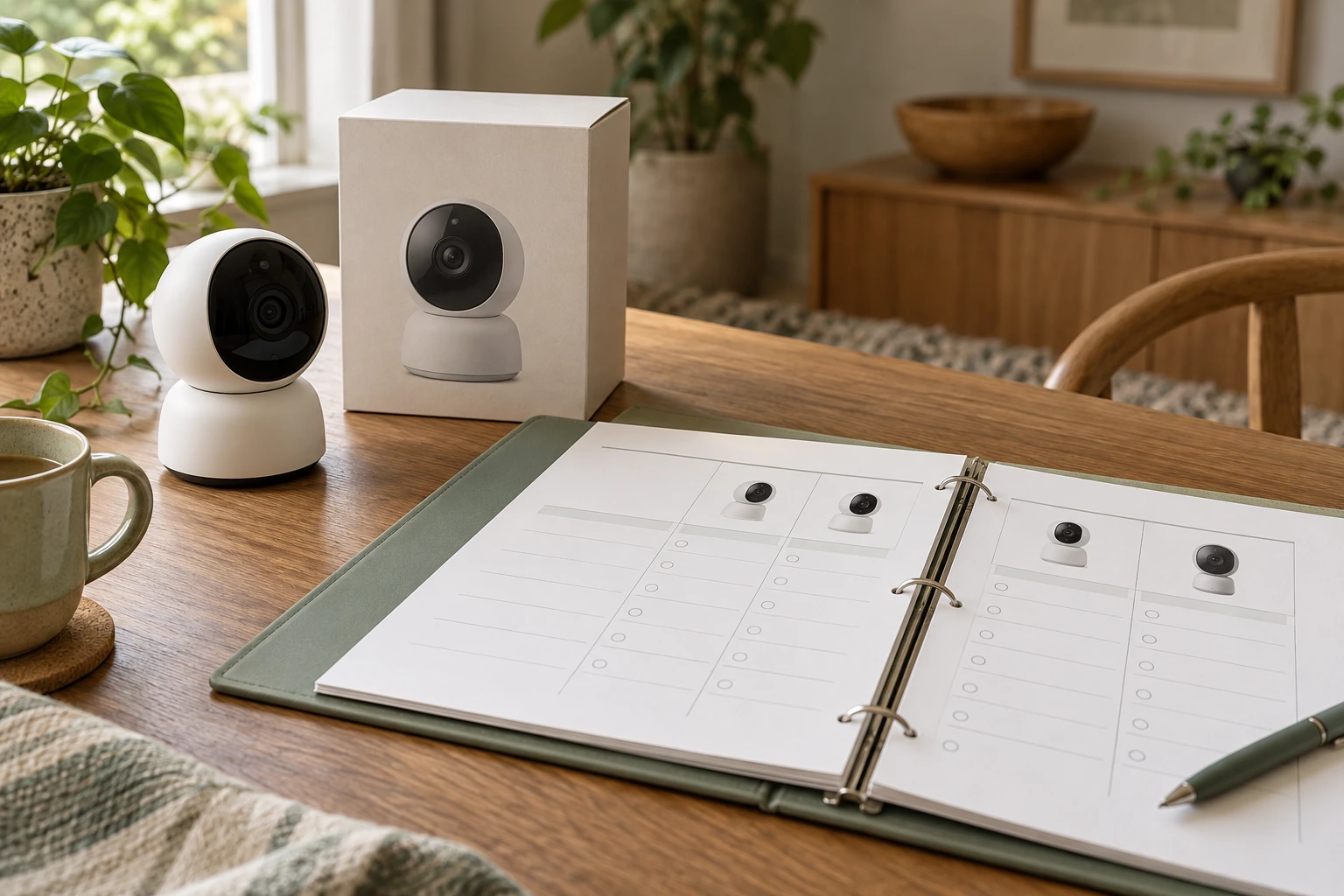
TP-Link’s UK C120 information illustrates that a product can have different storage options. It does not establish the deletion behaviour of every copy or another device. The camera photograph is unrelated archival context and cannot supply that missing evidence. Preserve unresolved questions rather than inventing a universal deletion assurance.
TP-Link UK: Tapo C120 product information ?
Assign responsibility for a reviewable plan
Identify the authorised person who manages the recording choices and revisits them when circumstances change. Keep the model, plan, source date and the reason for the chosen settings together. Do not include private footage or credentials in a public planning worksheet. The record should explain the decision without exposing the personal material it concerns.
The doorbell image makes a second possible recording source visible, not an approval to record a particular area. If several devices are present, review their purposes separately instead of extending one camera’s assumptions to all of them. A useful final plan remains limited and documented, without promising guaranteed deletion, legal compliance or a particular evidential outcome.