Separate local and cloud camera storage
Identify where recordings are stored, how they are accessed and which service dependencies remain.
Updated:
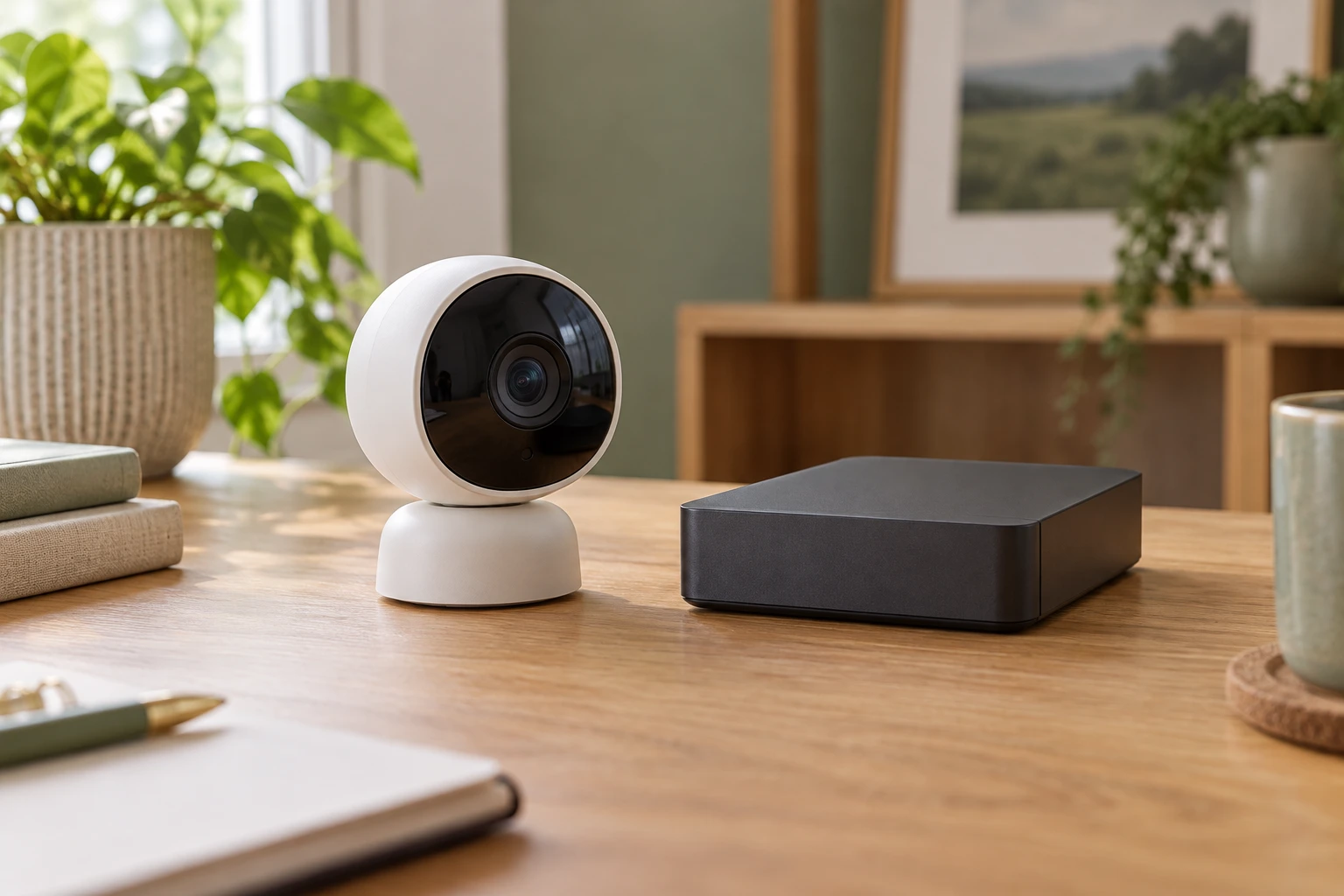
Ask where the recording actually goes
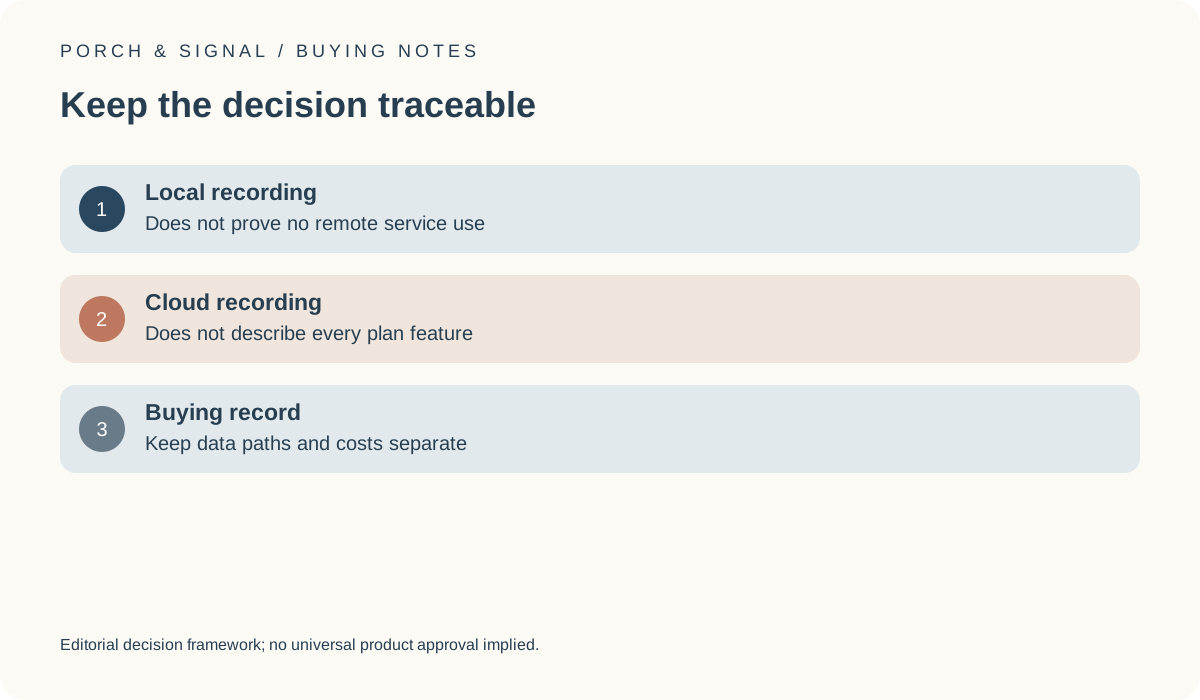
Local and cloud storage describe different possible recording arrangements, but the labels do not answer every privacy or access question. Identify the exact media, hub or recorder for a local option and the exact service and plan for a cloud option. Keep the route for viewing or exporting footage separate from the location where a recording is stored. Do not assume that a local-recording feature means the device uses no remote services.
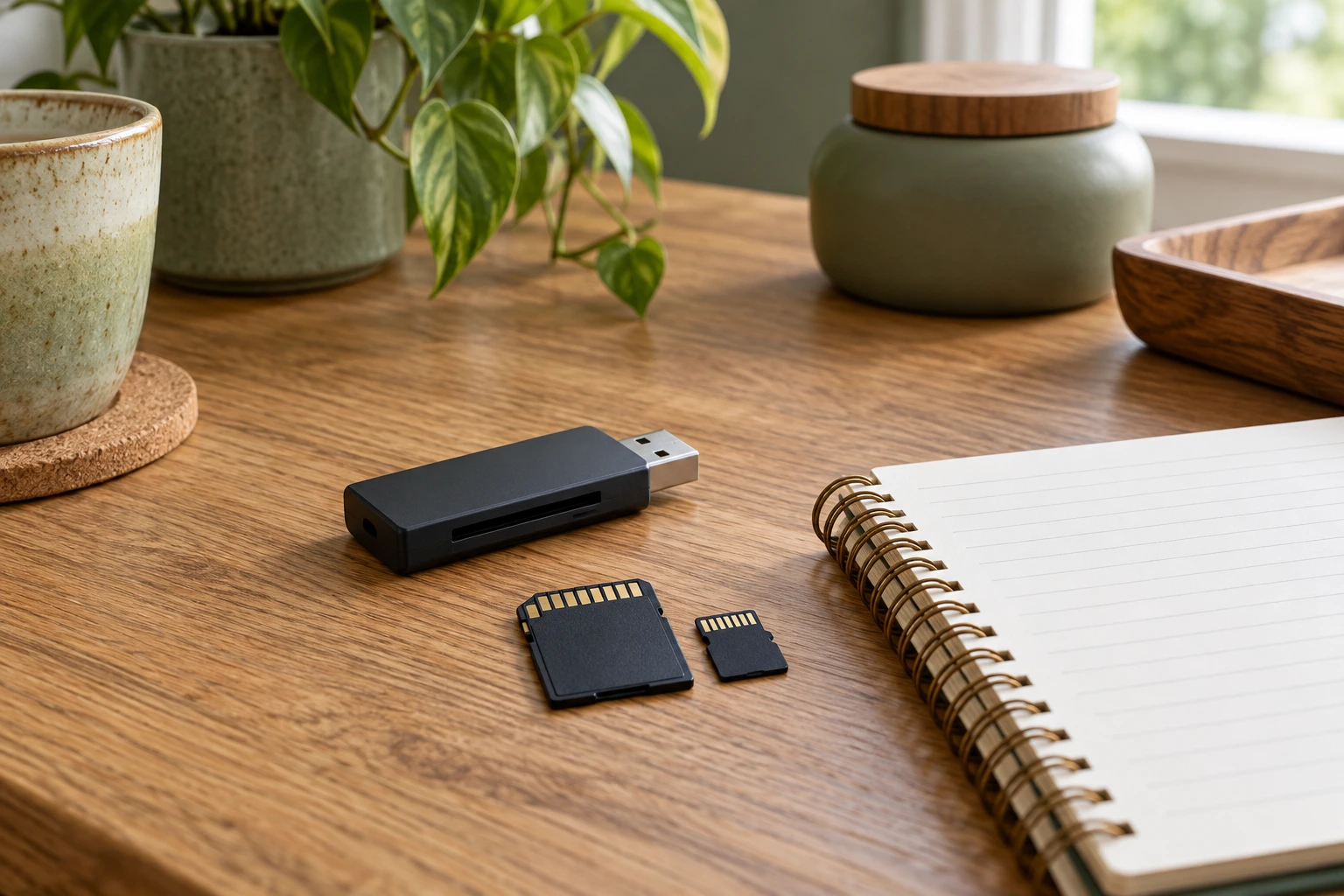
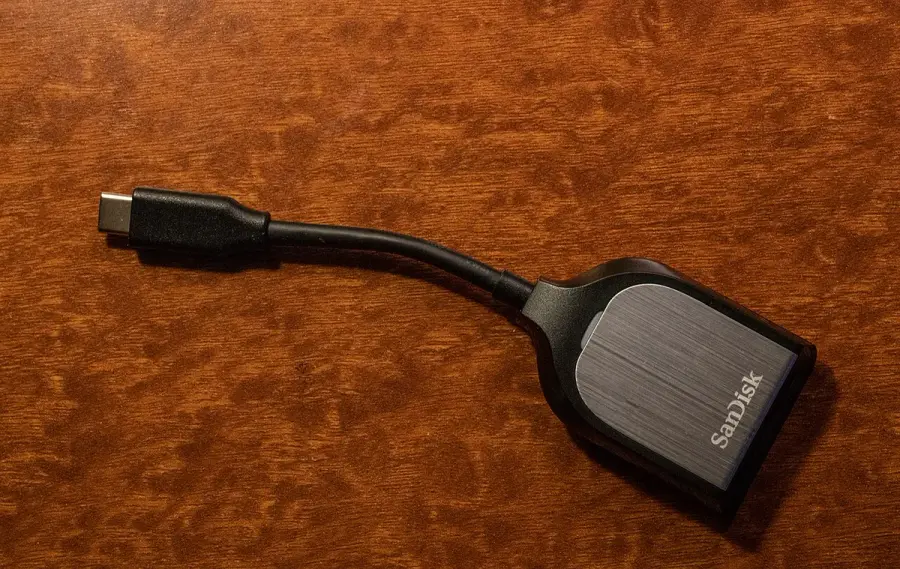
The external reader photograph makes a separate piece of reading equipment visible. It is not a microSD card or evidence of compatibility with a candidate camera. A useful buying record identifies the actual recording medium and any additional equipment needed, rather than borrowing a storage conclusion from an unrelated photograph.
Compare declared costs without pretending the options are identical
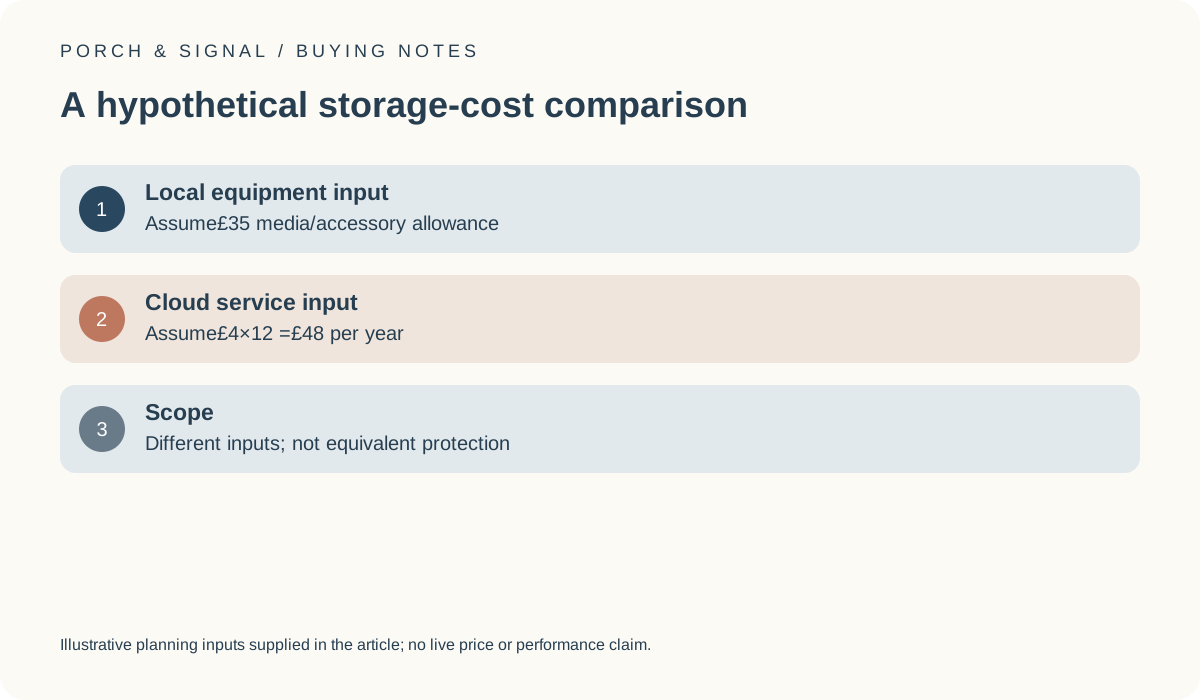
For a hypothetical comparison, a local-media and accessory allowance might be £35, while an invented cloud service charge of £4 per month becomes £48 over 12 months. These are illustrative inputs, not current prices or a claim that the two arrangements provide identical features. A one-time equipment allowance and a recurring service charge must remain in different cost categories.
Record the actual feature scope behind each offer. Access methods, included history and service dependencies can differ, so a smaller total does not establish that the options answer the same household question. Our ownership tool can add your declared charges, but it does not certify privacy, reliability or equivalence between storage arrangements.
Read the named manufacturer example narrowly
TP-Link’s UK C120 page describes a microSD option and an optional Tapo Care cloud service for that named product. Preserve the exact model and applicable source rather than applying the example to all cameras. A product that offers several storage options may still have separate conditions for its app, account or recording modes. The listing is a starting point for those questions, not our own interoperability test.
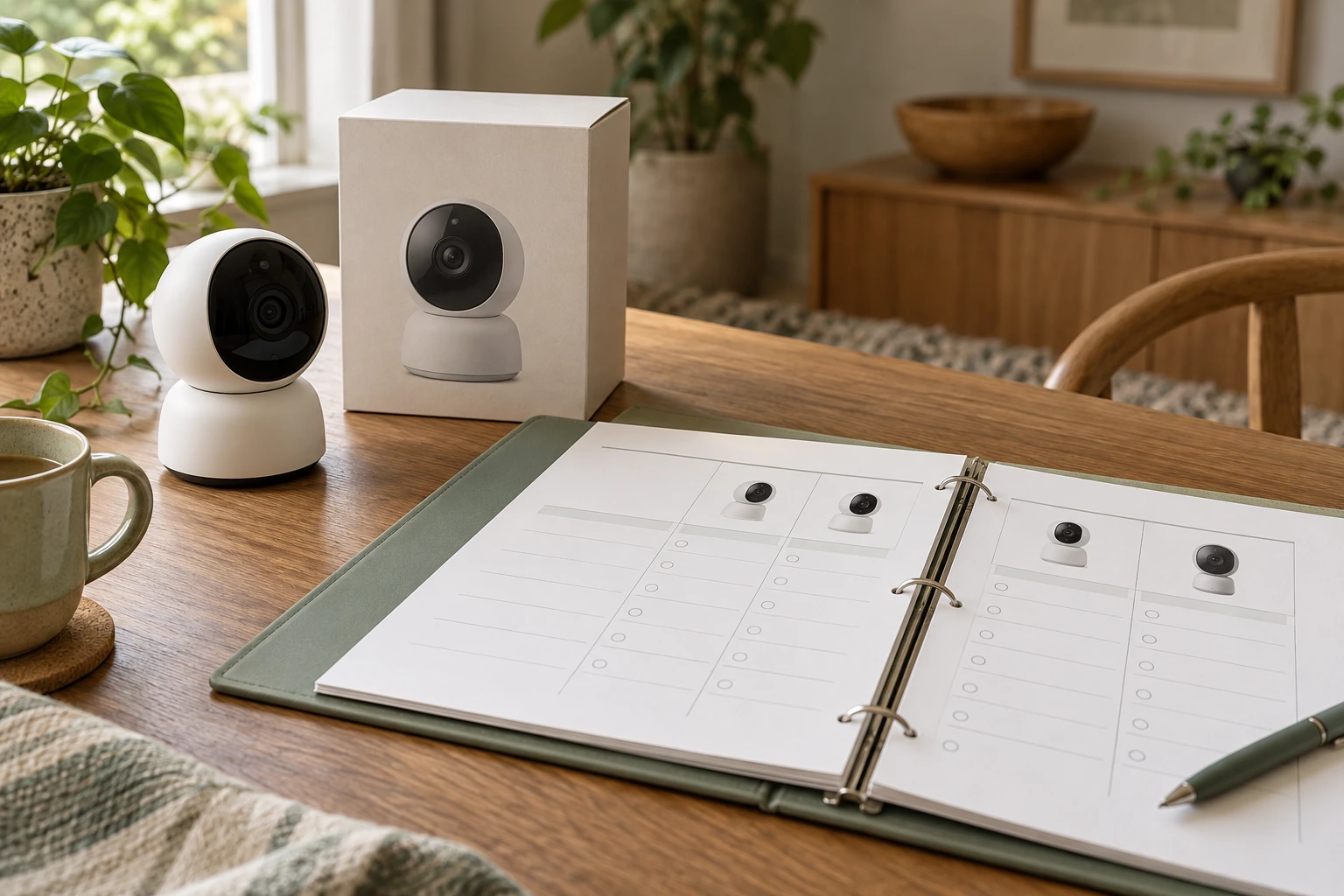
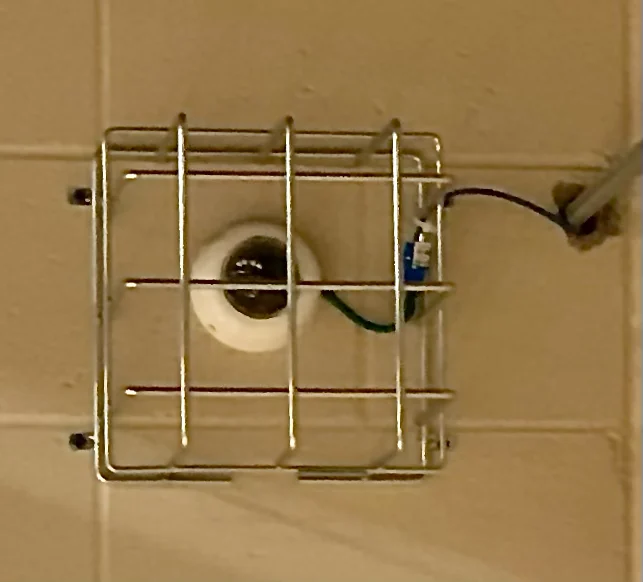
The guarded camera photograph is a different archival product. Its housing cannot establish a card slot, cloud feature or current subscription requirement. If the proposed model’s storage route is unclear, leave it unresolved before ordering instead of treating a general category label as evidence.
TP-Link UK: Tapo C120 product information ?
Keep access and ownership responsibilities visible
Determine who is authorised to view recordings and how the actual product grants that access. Keep account permissions, network dependencies and the manufacturer’s documented export process in the review. A recording held on physical media can still require careful handling, while an online service can introduce its own account and plan conditions. Neither label is a complete privacy assurance.
The NCSC smart-device guidance is relevant to settings and ongoing software care. It does not establish that a particular local or cloud product is immune to compromise. Do not replace a documented access review with a blanket claim that one storage location is always secure or that the other is always unsuitable.
UK NCSC: Smart devices in the home ?
Choose an arrangement that serves the stated purpose
The final comparison should name the recording location, viewing route, required equipment, service scope and costs. Keep any unresolved question about access or data handling visible. The router image is included to distinguish network equipment from the storage medium itself; it does not prove speed, support duration or the route taken by a camera’s data.
Review retention and deletion separately from storage location. A local card is not permission to keep every recording indefinitely, and a cloud service’s maximum history is not automatically the right retention period for your use. A useful decision explains why the documented arrangement serves a limited household purpose without inventing a performance test or a universal privacy ranking.