Understand the UK CCTV boundary question
Use the current ICO guidance to review what is captured, why it is needed and which owner responsibilities apply.
Updated:

Use the official UK starting point
The ICO’s home-CCTV guidance explains that data-protection rules apply when a home system captures beyond the property boundary. Review the actual proposed use, including images or audio, against the current official guidance. A domestic camera or doorbell label does not by itself settle the owner’s responsibilities. This article is a buying and review checklist, not an individual legal determination or permission to record another person.
Start with a clear reason for the recording and identify what would be captured. The archived camera photograph identifies equipment only. It does not demonstrate an appropriate field of view, the boundaries of a property or compliance with any rule. Those questions cannot be answered from a generic image.
Allow time to review the actual question
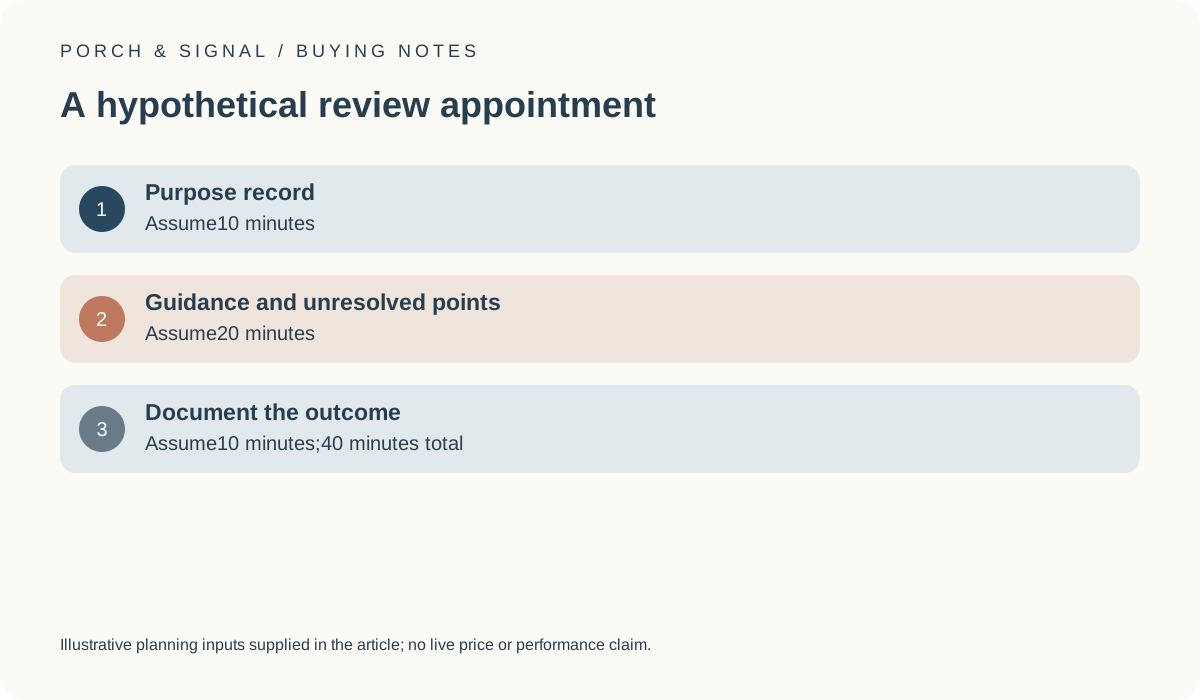
For an illustrative planning appointment, assume 10 minutes to state the purpose, 20 minutes to read the relevant guidance and list unresolved points, and 10 minutes to document the outcome. The total is 40 minutes. These are invented personal time allowances, not a legal standard or a promise that a complex situation can be assessed within that period.
The useful result is a clear record of what is known and what remains uncertain. Do not use the time example to rush a dispute, a request concerning footage or a difficult property arrangement. If the available guidance does not resolve the actual case, appropriate specialist or official advice may be needed rather than a guessed conclusion from a product feature.
Keep capture, access and deletion in separate records
The ICO guidance discusses responsibilities including limiting unnecessary capture, informing people, secure access and regular or automatic deletion. It also addresses responding to relevant requests. Read the source in its full applicable context rather than treating this short list as a compliance certificate. A product setting can help implement a choice but does not make the whole decision automatically appropriate.
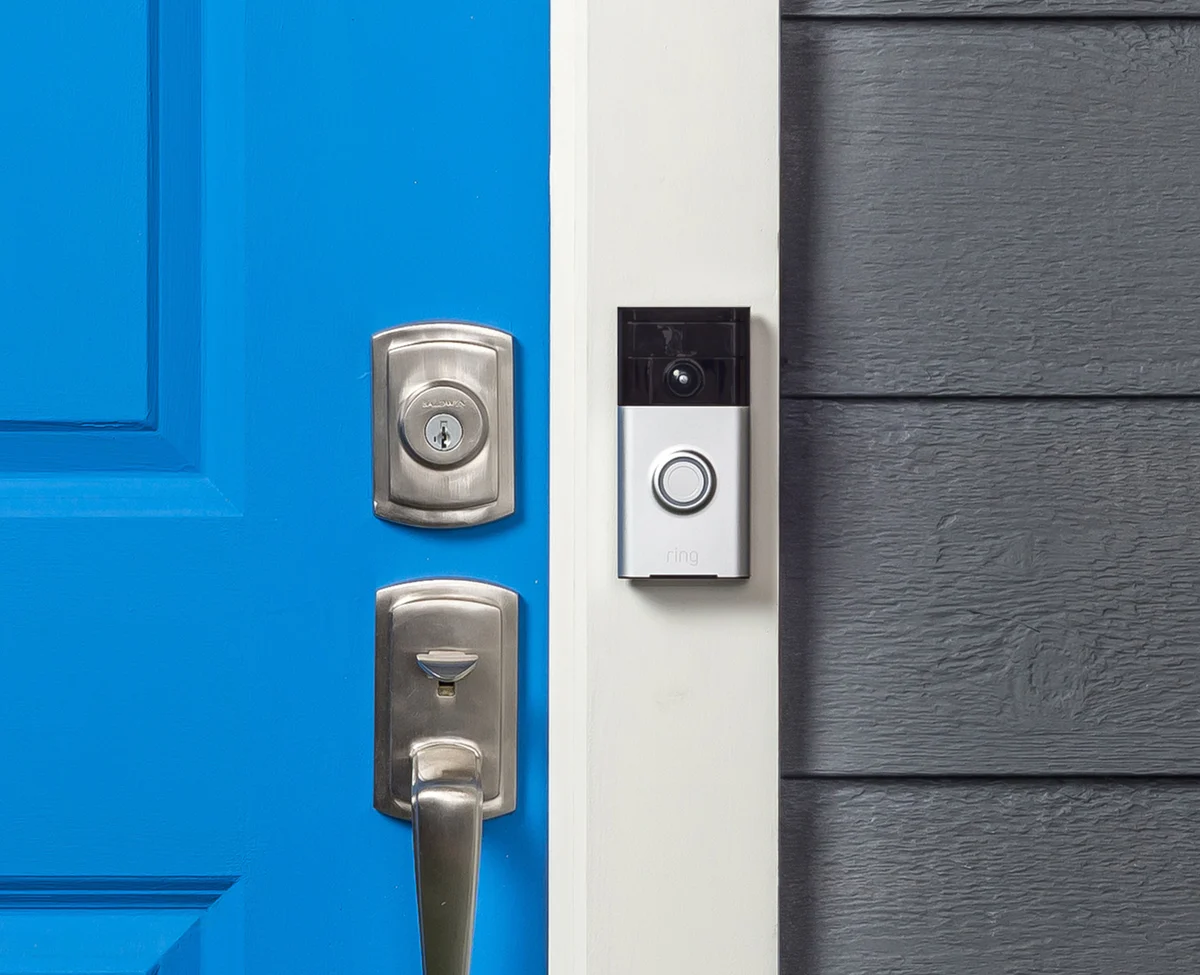
The doorbell photograph shows another physical recording source, not an approved view or a prescribed position. Include audio and any copies in the actual review where relevant. Avoid publishing private footage, credentials or personal details in a public buying worksheet. The record should describe the purpose and process without exposing the material it concerns.
Avoid turning a maximum feature into a privacy decision
A wide lens, a long advertised history or a masking feature should be read as a product capability with its own scope. None independently decides what the household should capture or retain. Keep those owner decisions separate from the largest specification on the sales page. If a necessary product condition has not been established, leave it unresolved before ordering.
Likewise, local storage is not a blanket privacy assurance, and a cloud service label does not describe every access or deletion behaviour. The external reader image makes separate equipment visible but cannot establish a lawful retention period or authorise sharing. Use the applicable product information alongside the official guidance instead of substituting a convenient category label for evidence.
Leave a reviewable decision rather than a guarantee
Record the purpose, the relevant capture questions, the dated official source and the unresolved points. Identify the authorised person responsible for the choices and for reviewing changes. A household move, changed doorway or new feature can require the record to be revisited. Do not assume that a previous assessment automatically applies to another property or device.
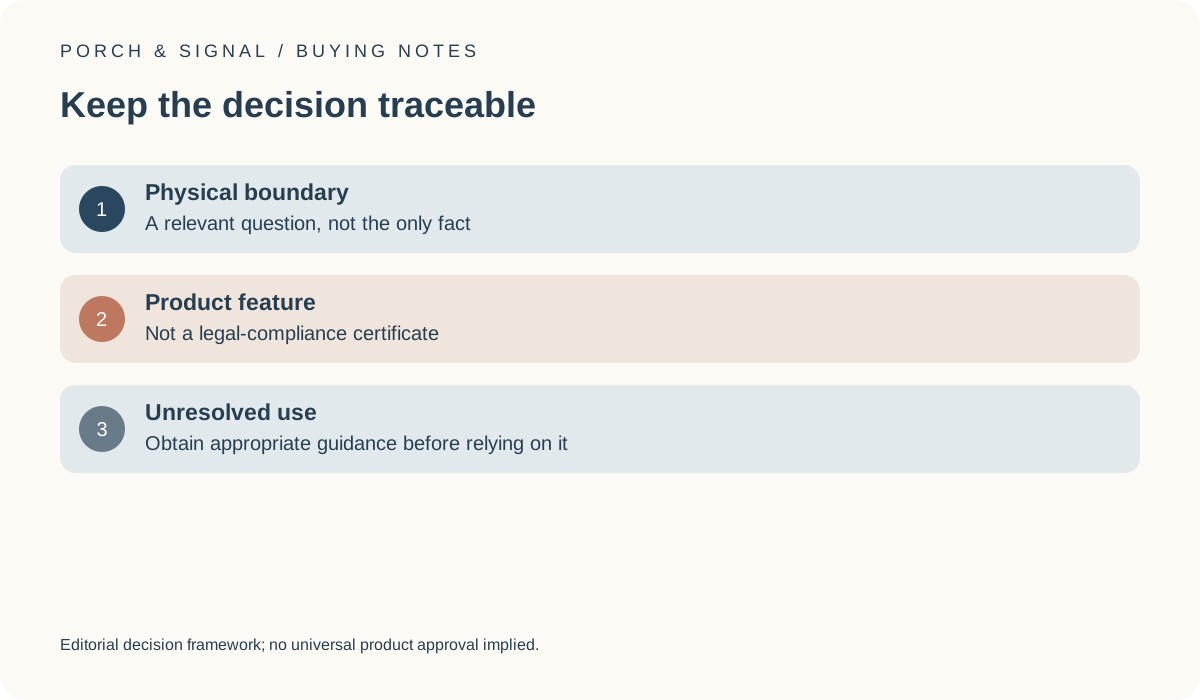
The final buying decision may involve narrowing the proposed use, choosing a different arrangement or postponing the purchase while a question is resolved. It should not promise guaranteed legal compliance, successful evidence collection or a particular response to a dispute. Current ICO guidance is the authoritative starting point; our diagrams organise the review without replacing it.